

Below-elbow (transradial) prostheses – prosthetic hands
Prosthetic hands for below-elbow amputation: functional myoelectric or body-powered prostheses and cosmetic solutions, with multi-articulating hands such as the bebionic and i-Limb Quantum.
Custom-made silicone prosthetic fingers and partial hand prostheses, with the shape, detail and skin tone of your own hand, for a natural appearance and greater confidence.
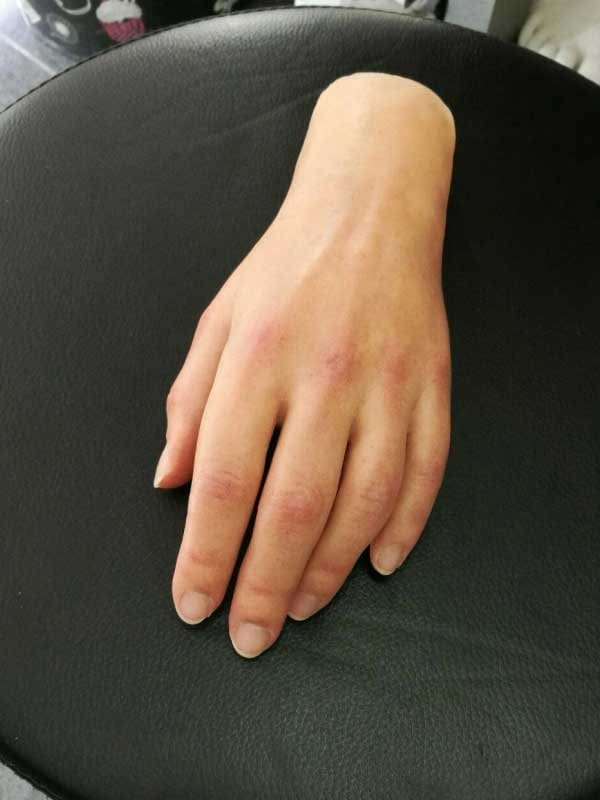
Losing one or more fingers or part of the hand, whether through an accident, an injury or a congenital cause, affects both function and the way we see ourselves. Finger prosthetics and silicone hand prostheses restore the shape of the hand in such detail that they are often hard to tell apart from a natural hand.
Cosmetic prostheses, also known as silicone prostheses, are passive hand or finger prostheses. They are called passive because they have no active movement of their own, unlike myoelectric hands and myoelectric fingers, which move using the signals from your muscles.
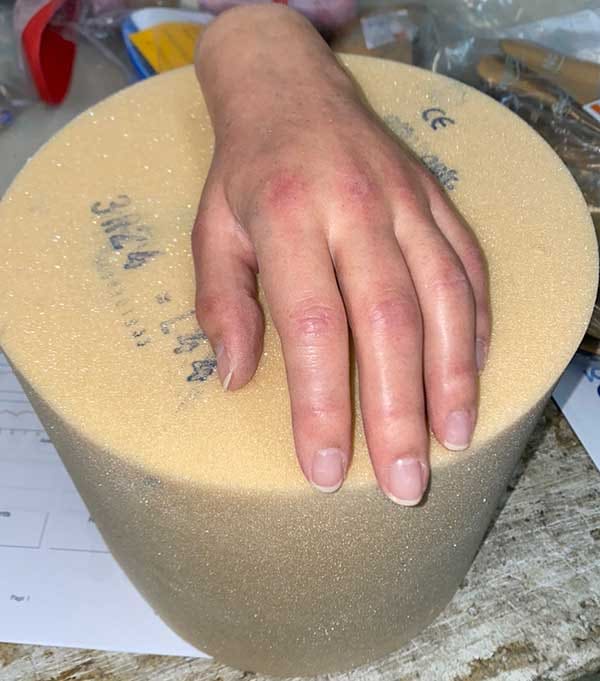
They are made from a custom, translucent silicone “glove” shaped to match your healthy hand in great detail: it can include wrinkles, veins, the shape of the joints and nails. The silicone is then painted to match your skin tone, hair, freckles and other features. If you wish, even a tattoo can be reproduced.
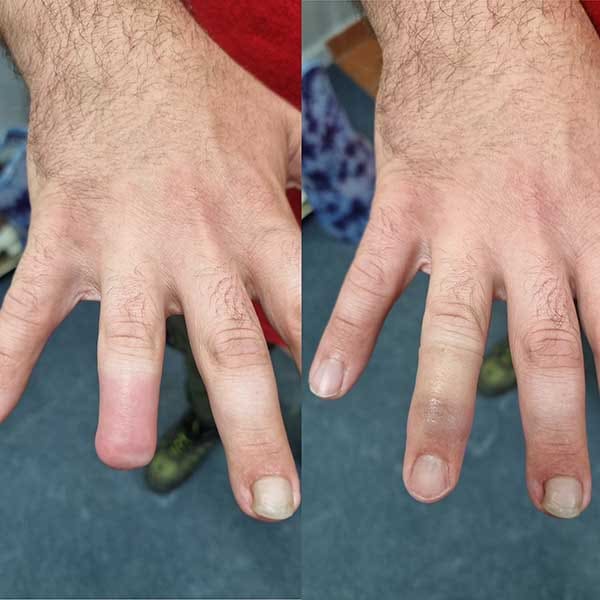
The prosthesis is usually held in place by the precise fit of the silicone over the residual finger or hand, without straps. If the residual limb is very short, we discuss the best way of holding the prosthesis in place with you.
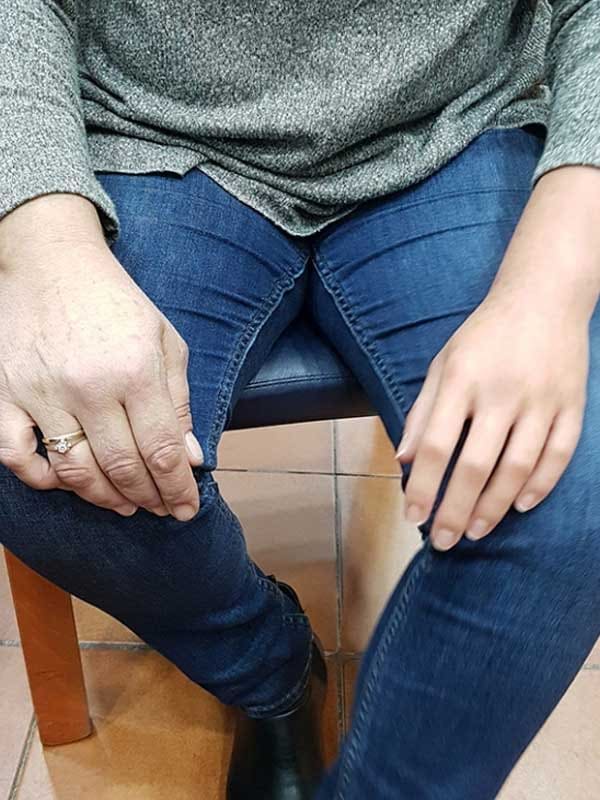
If you are looking for prosthetic fingers, there are two main routes:
The right choice depends on your amputation level, your work and what you want to do with your hand. We discuss it with you without rushing, in collaboration with your treating physician. If your amputation is recent, you will also find useful information in our guide after amputation.
The cost depends on how many fingers or how much of the hand is being replaced, and on the level of detail. After your assessment, we give you a written proposal.
Is it covered by EOPYY? We are a contracted provider of EOPYY (ΕΟΠΥΥ), Greece’s national health insurance organisation, whose reimbursement applies to people insured in Greece. According to Government Gazette (ΦΕΚ) B' 1079/2022, the maximum reimbursable price is €2,950 for a silicone hand prosthesis and €675–875 for a silicone finger prosthesis, with replacement every 3 years. You need an electronic prescription/referral from a doctor of the relevant specialty, and the co-payment is 25% (Government Gazette B' 2106/2025, article 46). See our page on EOPYY reimbursement. If you are not insured in Greece, EOPYY reimbursement does not apply; you can pay privately, and any cover depends on your own insurer’s rules – contact us and we will give you the information you need for your case. This information is valid as of the date of the last update.
See all our solutions in upper-limb prosthetics or contact us on +30 2310 282 894 to find out more.
It is the making of prosthetic fingers for people who have lost one or more fingers or phalanges. The most common solutions are silicone prostheses, which faithfully reproduce the shape and colour of your skin. For functional movement there are also myoelectric fingers, such as the i-Digits Quantum, for suitable candidates.
No, silicone prostheses are passive and have no movement of their own. However, they can help with simple grips by acting as a stable point of resistance. If you need active movement, see the myoelectric fingers and hands on our below-elbow prostheses page and talk to us about your options.
The price depends on the number of fingers, the amputation level and the detail of the colouring. For people insured in Greece, EOPYY reimburses a silicone finger prosthesis up to €675–875, according to Government Gazette (ΦΕΚ) B' 1079/2022, with a 25% co-payment. After your assessment, we give you a written proposal. See our page on EOPYY reimbursement.
How long it lasts depends on use and care. Silicone keeps its colour well, but it can be damaged by sharp objects, high temperatures or dyes. EOPYY provides for replacement of silicone hand and finger prostheses every 3 years. We give you care instructions when we hand over your prosthesis.
Silicone is water-resistant, so you can generally wash your hands with the prosthesis on. Afterwards, it is a good idea to take it off and dry your residual limb and the inside of the prosthesis thoroughly so that your skin does not become irritated. Always follow the care instructions we give you for your own prosthesis.
Prosthetic hands for below-elbow amputation: functional myoelectric or body-powered prostheses and cosmetic solutions, with multi-articulating hands such as the bebionic and i-Limb Quantum.
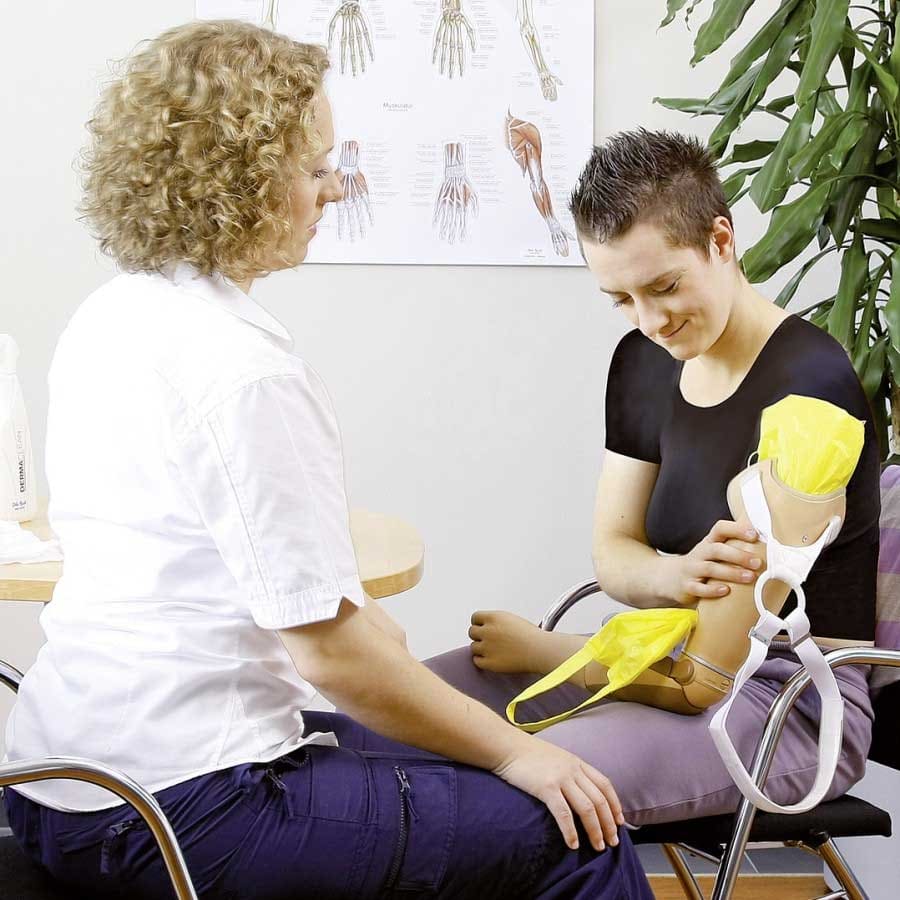
Above-elbow prostheses for amputation above the elbow: cosmetic, body-powered and myoelectric solutions, with electronic elbows and a design tailored to you.
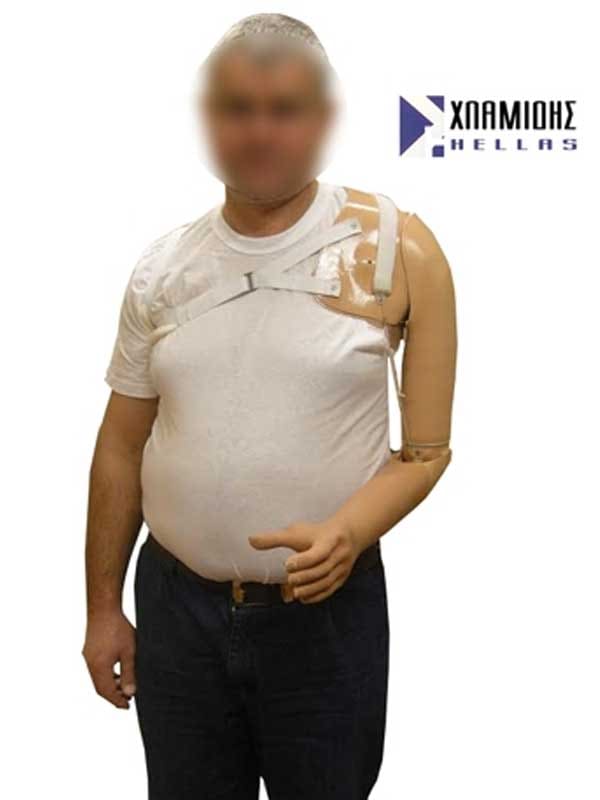
Even when almost the entire arm has been removed, a shoulder disarticulation prosthesis can provide symmetry, support and, with myoelectric components, function.









Book an appointment at Egnatia 101, Thessaloniki, or call +30 2310 282 894 about a silicone finger or hand prosthesis.
Settings are saved on your device. Accessibility statement