
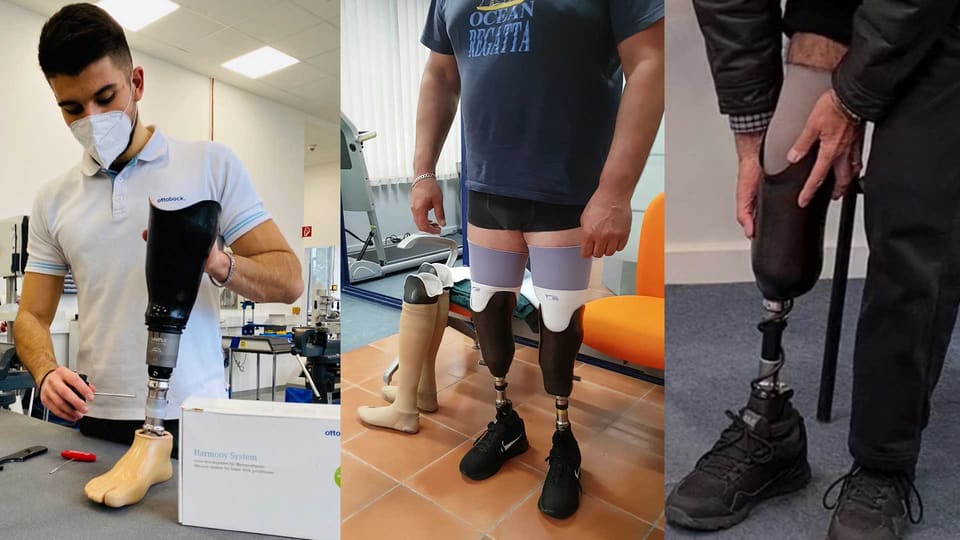
Below-knee (transtibial) prostheses – a prosthetic leg below the knee
Modern below-knee prostheses with a custom-made socket, silicone liner and vacuum suspension systems for a secure fit all day long.
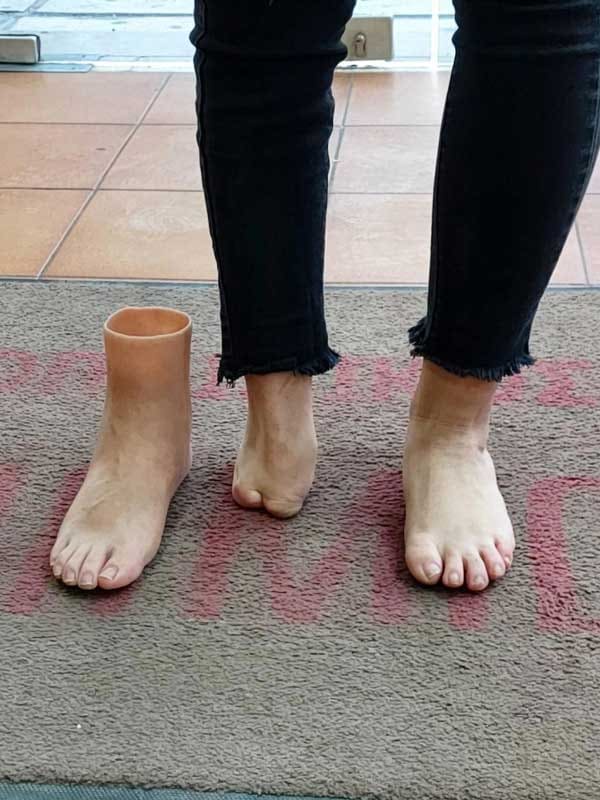
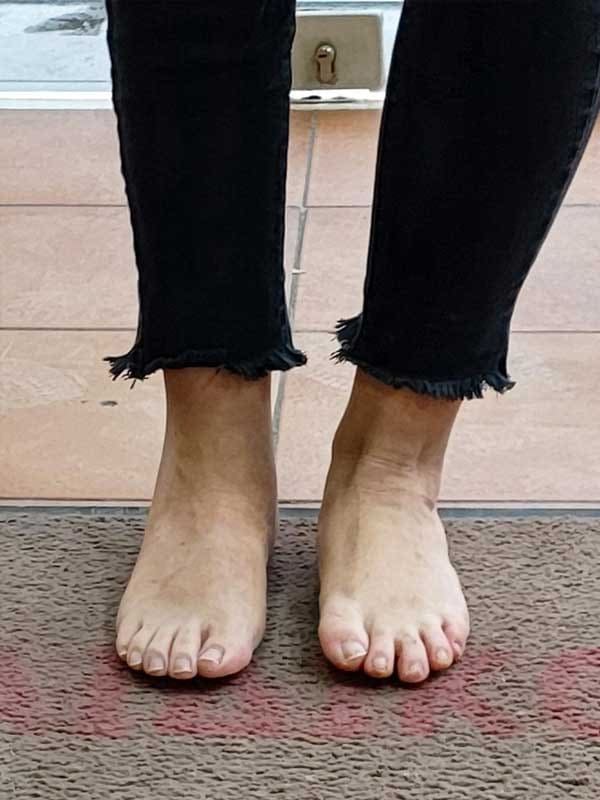
For partial-foot amputation we make custom silicone prostheses that restore the shape of the foot, protect the residual limb and fit inside your shoe.
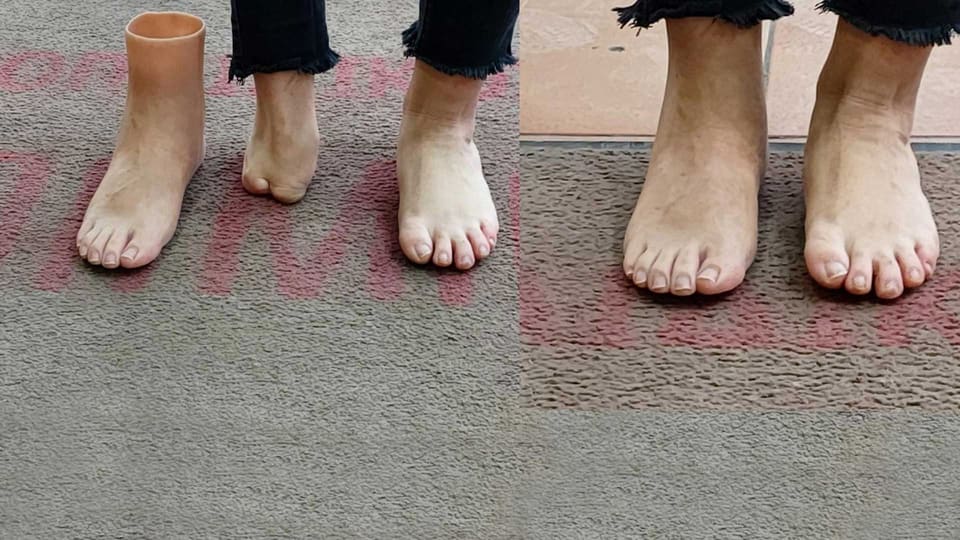
Partial-foot amputation, such as a Chopart or Lisfranc amputation or the amputation of toes, preserves the heel and part of the foot. This is an important advantage for walking, but it leaves a shorter foot that needs proper protection and support.
Modern technology has made it possible to make prostheses whose design is based on silicone: a material that is softer, more functional and more comfortable to wear. The new generation of silicone prostheses has solved many of the problems caused until recently by plastic prostheses.
The most common causes are complications of diabetes and vascular disease, injuries and, more rarely, congenital conditions. The shorter the residual limb, the more important it is for the prosthesis to “hug” it properly.
Silicone is kinder to the skin and more comfortable, because it:
In some cases the prosthesis can be used early on, always with the approval of your treating physician. For patients with diabetes, the decision on when to start wearing it and regular skin checks are especially important.
At first you wear the prosthesis for a few hours a day and gradually increase the time, so that your skin gets used to it. It is normal to need small adjustments after the first few days of use, which is why we ask you to come back for a check-up. If you notice redness that does not go away, pain or a sore, take the prosthesis off and contact us and your doctor straight away. Over time, the prosthesis becomes part of your everyday life.
A silicone prosthesis is usually worn with a closed, supportive shoe. For patients with diabetes we also recommend suitable diabetic shoes, while your other foot may need a foot scan and custom orthotic insoles. If the amputation is at a higher level, see our below-knee prostheses.
The cost depends on the level of amputation, the size of the prosthesis and your support needs. After your assessment we give you a written proposal.
Is it covered by EOPYY? We are a contracted provider of EOPYY (ΕΟΠΥΥ), Greece’s national health insurance organisation. For people insured in Greece, the maximum reimbursable prices according to Government Gazette (ΦΕΚ) B' 1079/2022 are: Chopart prosthesis €1,437, Syme-Pirogoff prosthesis €1,725 and Lisfranc prosthesis with a silicone foot €3,378, with replacement every 6 months up to the age of 16 and every 2 years after 16. For a silicone toe prosthesis the maximum price is €776. A prescription from a doctor of the relevant specialty is required, with a 25% co-payment (FEK B' 2106/2025, article 46). See our EOPYY reimbursement page. This information is correct as of the date of the last update.
If you are not insured in Greece, EOPYY reimbursement does not apply; you can pay privately, and any cover depends on your own insurer’s rules. Contact us and we will give you the information you need for your case.
See all our options under lower limb prosthetics or book an appointment on +30 2310 282 894.
It is a partial-foot amputation carried out at the level of the tarsal joints, so that mainly the heel and the ankle are preserved. A Lisfranc amputation is carried out further forward, roughly in the middle of the foot. In both cases, a silicone prosthesis restores the shape of the foot and protects the residual limb.
In most cases, yes. The prosthesis is designed to fit inside a closed, supportive shoe, often the same size as on your other foot. For patients with diabetes we recommend therapeutic footwear for better protection. We will advise you on the right shoe when the prosthesis is fitted.
Yes, for people insured in Greece. FEK B' 1079/2022 sets a maximum reimbursable price of €1,437 for a Chopart prosthesis and €3,378 for a Lisfranc prosthesis with a silicone foot. Replacement is every 6 months up to age 16 and every 2 years after 16, on a doctor’s prescription and with a 25% co-payment. See our EOPYY reimbursement page.
Yes, we also make silicone prostheses for the amputation of one or more toes. They restore the appearance of the foot, fill the gap in the shoe and can help keep the remaining toes in the correct position. FEK B' 1079/2022 sets a maximum reimbursable price of €776 for a silicone toe prosthesis.
Silicone is easy to clean with lukewarm water and mild soap, and it should be dried thoroughly before you put it on again. Check the skin of your residual limb every day for redness or sores, especially if you have diabetes. We give you detailed instructions when the prosthesis is handed over to you.
Modern below-knee prostheses with a custom-made socket, silicone liner and vacuum suspension systems for a secure fit all day long.
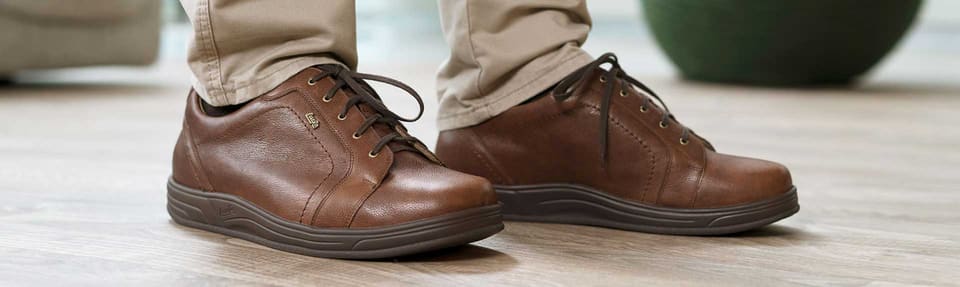
Shoes for people with diabetes that protect the feet from friction, pressure and injury: all-leather, with no internal seams, made to measure by Germany's Schein–LucRo, at Egnatia 101.
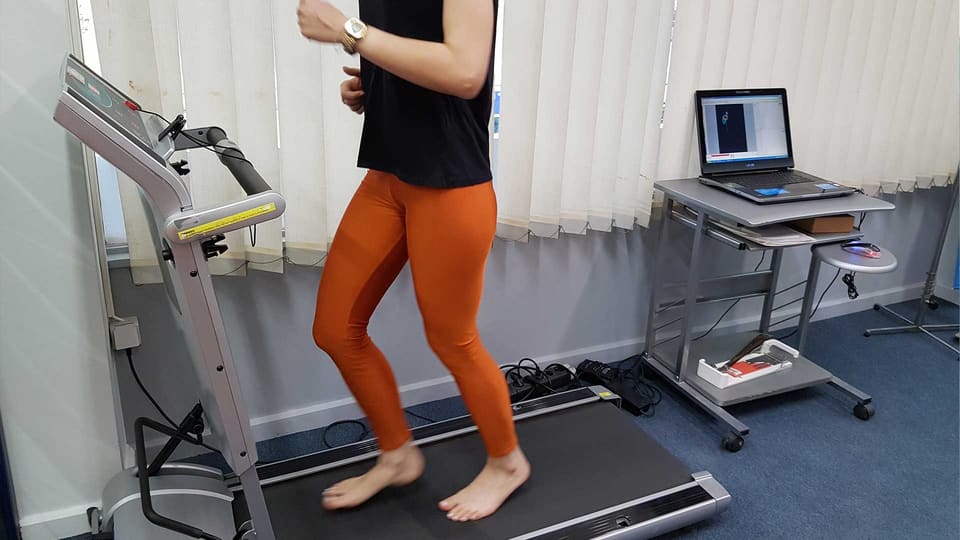
Have a static or dynamic foot scan with gait analysis on our digital foot scanner on Egnatia Street, and get orthotic insoles, ready-made or custom, that match your own needs.









Call +30 2310 282 894 or visit us at Egnatia 101 so we can find the right silicone prosthesis for your foot together.
Settings are saved on your device. Accessibility statement