
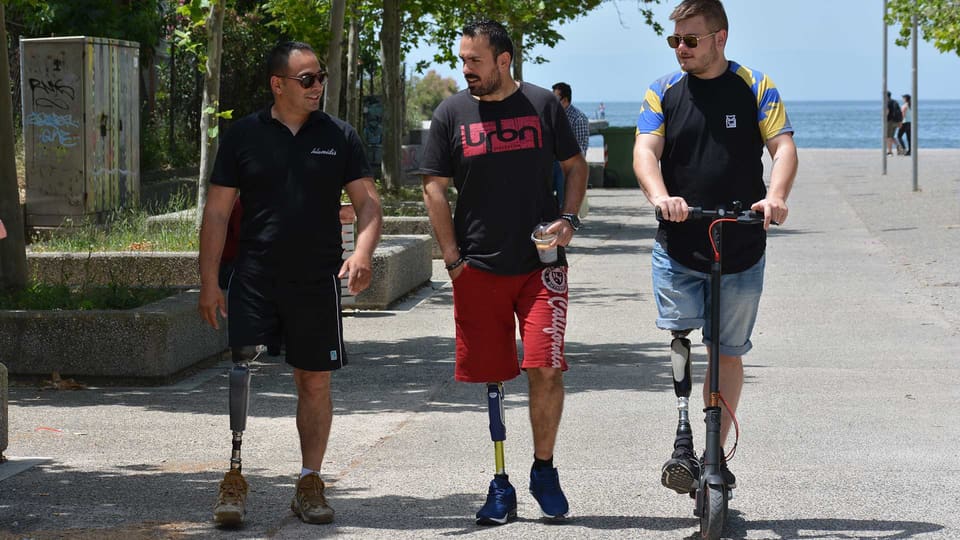
Prosthetic legs – above-knee (transfemoral) prostheses
Custom above-knee prostheses for amputation above the knee: from your first assessment and test socket to gait training and ongoing aftercare.
Modern below-knee prostheses with a custom-made socket, silicone liner and vacuum suspension systems for a secure fit all day long.
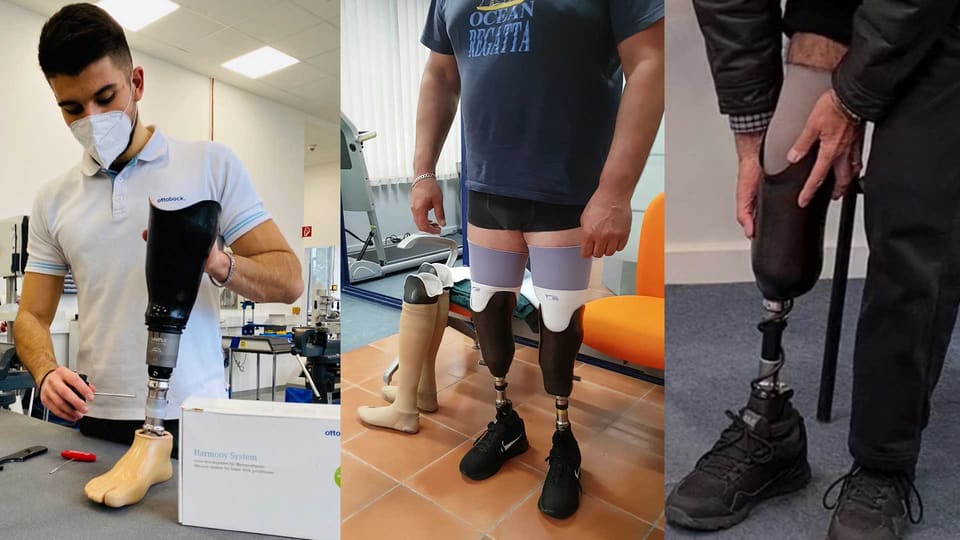
Below-knee (transtibial) amputation is the most common lower limb amputation. It is usually caused by diabetes or vascular disease, an accident or a congenital condition (e.g. phocomelia). Because the natural knee is preserved, a well-made below-knee prosthesis can give you a very natural gait.
At Hlamidis Orthopaedic Center in Thessaloniki we design every below-knee prosthesis to order, mainly with components from Össur and Ottobock, which we have chosen for their reliability and the good response of our patients.
The old types of socket with straps have largely been replaced. Today the prosthetist fits a silicone liner over the residual limb and chooses the suspension mechanism:
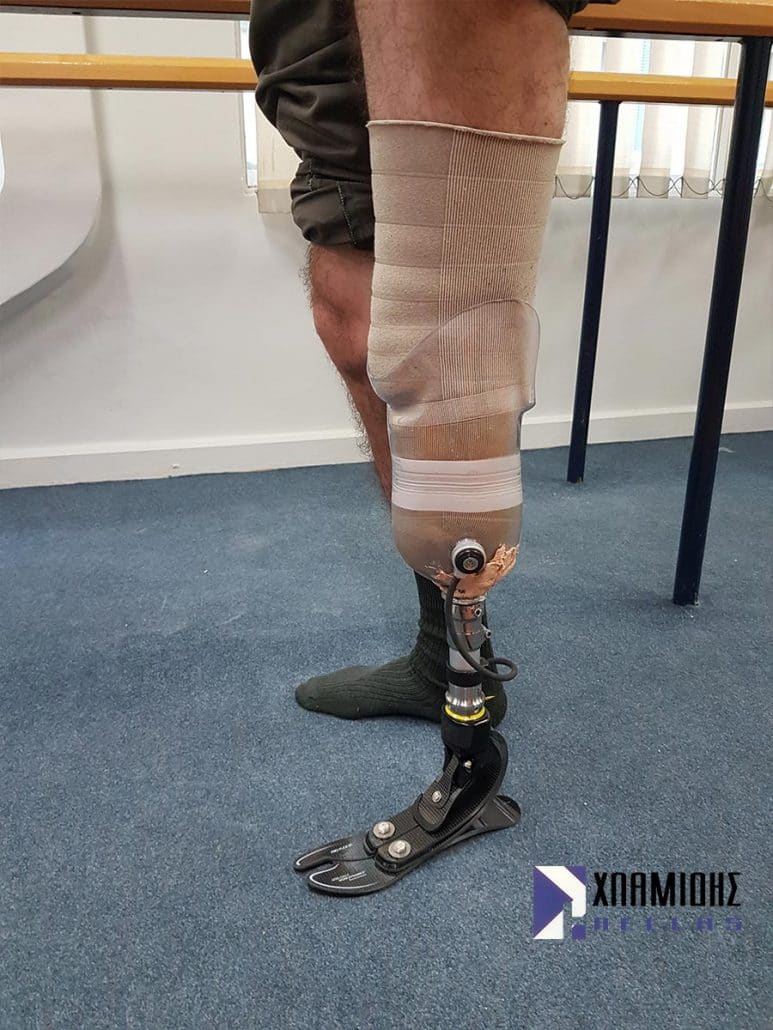
For active users we often combine Össur’s Pro-Flex XC foot with the Unity vacuum system. According to the manufacturer, the Pro-Flex family offers up to 27 degrees of ankle motion and energy return, with the aim of reducing the load on the sound leg. Unity provides vacuum suspension without the external sealing knee sleeve that other systems need.
The same foot does not suit everyone. An older user who needs stability and a young person who runs need different components. For those looking for a foot with electronic control, there is also the Proprio Foot bionic foot.
For the road from amputation back to everyday activity, see our guide after amputation: your first prosthesis.
Many of our patients with a below-knee amputation have diabetes. In this case, protecting the skin of the residual limb and of the sound foot is equally important. We can also help you with diabetic shoes and insoles for your other foot.
The price of a below-knee prosthesis depends mainly on the type of socket, the suspension system and the foot. After your assessment we give you a written proposal itemised by component. Find out more in our article how much a prosthetic leg costs.
Is it covered by EOPYY? We are a contracted provider of EOPYY (ΕΟΠΥΥ), Greece’s national health insurance organisation. For people insured in Greece, the prosthesis is reimbursed per component, on a prescription from a doctor of the relevant specialty and with a 25% co-payment (Government Gazette (ΦΕΚ) B' 2106/2025, article 46). As an indication, the maximum reimbursable price according to FEK B' 1079/2022 is €1,150 for a carbon below-knee socket and €1,078 for a high-dynamic foot, replaced every 5 years, and €555 for a below-knee silicone liner, per year. See our EOPYY reimbursement page. This information is correct as of the date of the last update.
If you are not insured in Greece, EOPYY reimbursement does not apply; you can pay privately, and any cover depends on your own insurer’s rules. Contact us and we will give you the information you need for your case.
See all our options under lower limb prosthetics or contact us on +30 2310 282 894 to book an appointment at Egnatia 101.
It is a transtibial amputation, in which part of the lower leg is removed while the knee is preserved. It is the most common lower limb amputation and is usually caused by diabetes or vascular disease, an accident or a congenital condition. Because the knee still works, rehabilitation with a below-knee prosthesis is usually quicker than with an above-knee one.
The cost depends on the socket, the suspension system (pin, valve or vacuum) and the foot. That is why we give you a written proposal after your assessment, together with a calculation of the EOPYY reimbursement if you are insured in Greece. You will find the cost factors explained in detail in our article how much a prosthetic leg costs.
Both are vacuum suspension systems for lower limb prostheses. Harmony is made by Ottobock, while Össur’s Unity works without an external sealing knee sleeve and is combined with Pro-Flex feet. Which one suits you depends on your residual limb and your activity level, and we decide together after an assessment.
The silicone liner wears with daily use, and EOPYY provides for its replacement every year. The other components are usually replaced every 5 years, while the socket may need adjusting sooner if the volume of your residual limb changes. Regular check-ups help us spot this in good time.
Many below-knee prosthesis users walk briskly, exercise or run, with the right components and proper training. For sporting activities there are dynamic and dedicated sports feet. The level of activity you can safely undertake is decided together with your treating physician and physiotherapist.
Custom above-knee prostheses for amputation above the knee: from your first assessment and test socket to gait training and ongoing aftercare.
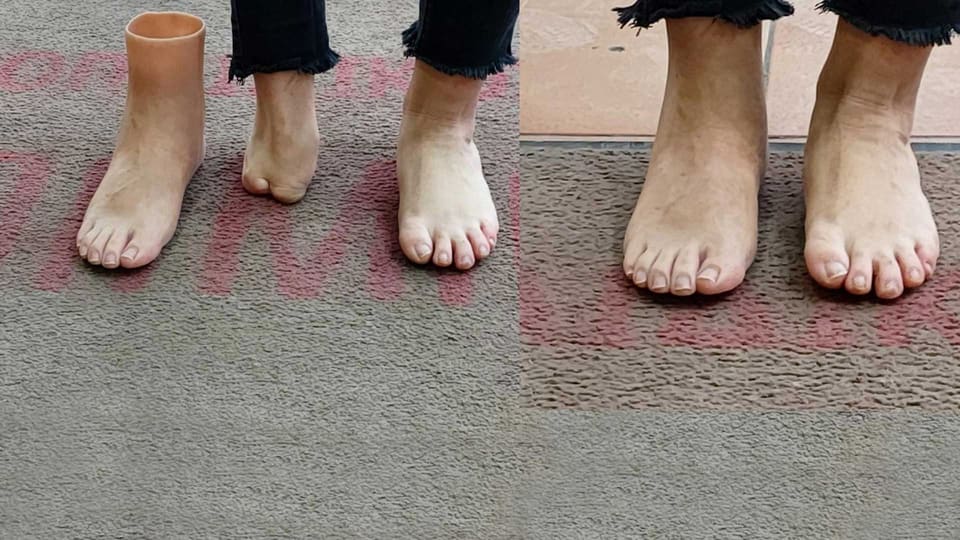
For partial-foot amputation we make custom silicone prostheses that restore the shape of the foot, protect the residual limb and fit inside your shoe.
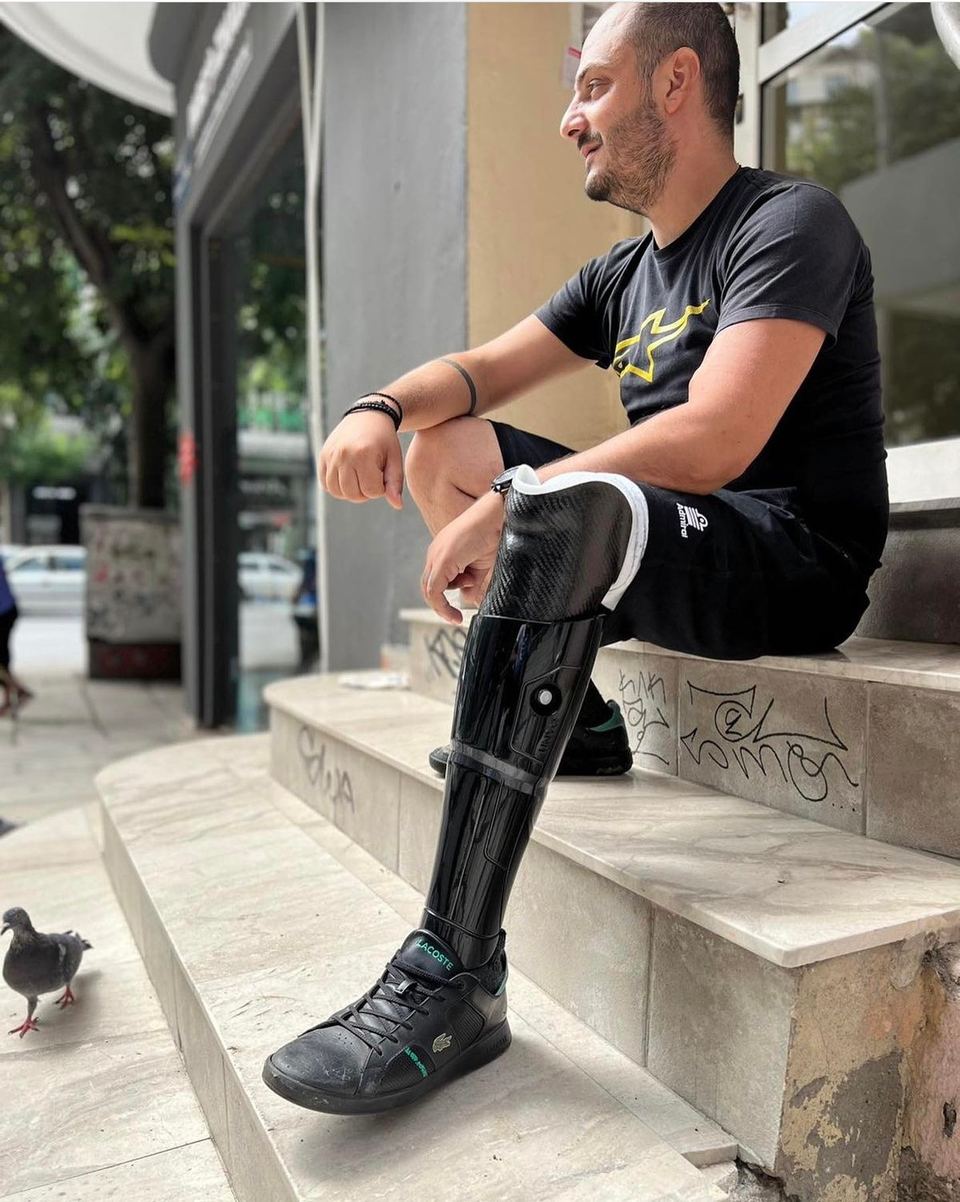
UNYQ covers are personalised, 3D-printed prosthetic covers that bring symmetry, protection and style to below-knee and above-knee prostheses.









Visit us at Egnatia 101 or call +30 2310 282 894 to discuss the below-knee prosthesis that fits your everyday life.
Settings are saved on your device. Accessibility statement