
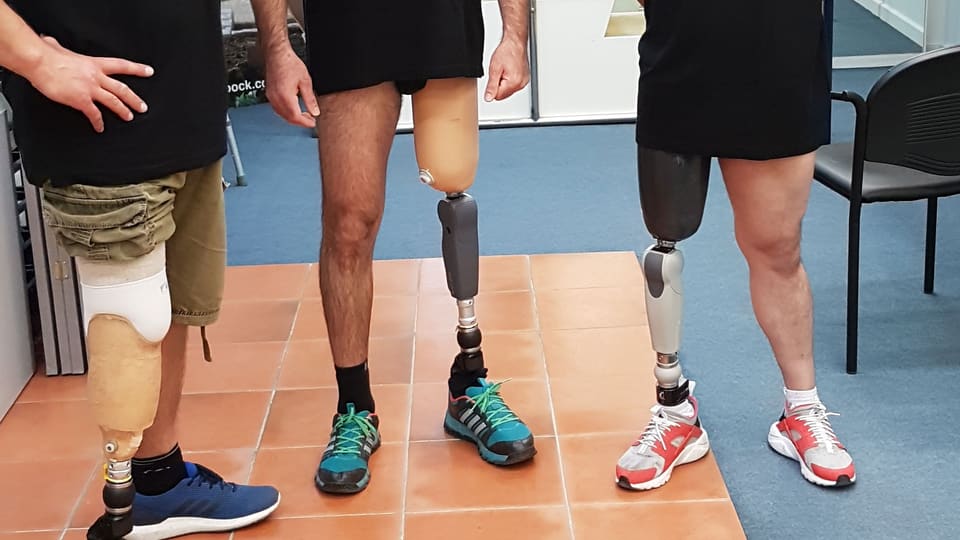
Lower limb prosthetics: a prosthetic leg for every level of amputation
Below-knee and above-knee prostheses, knee and hip disarticulation, silicone partial-foot prostheses: the right prosthetic leg for your level of amputation and the way you live.
Prosthetic legs, arms, hands and fingers for every level of amputation, designed and made in our Thessaloniki workshop with Ottobock and Össur components.
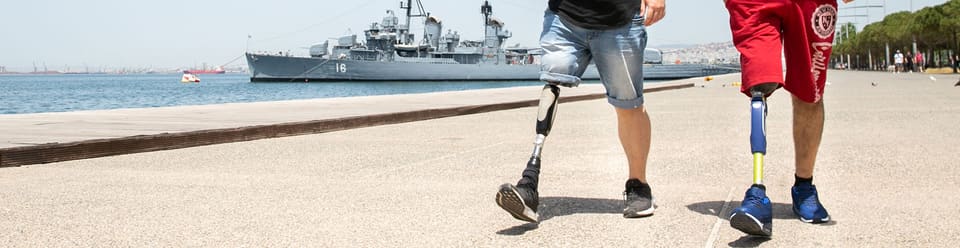
A prosthetic limb (or prosthesis) replaces part of a limb that is missing, either after an amputation or because of a congenital limb difference. Its purpose is both practical and deeply personal: to help you walk with confidence again, look after yourself, return to work and get back to the activities you love. Since 1952, Hlamidis Orthopaedic Center has been designing and making upper and lower limb prostheses in its own workshop in Thessaloniki, for patients from all over Greece.
A prosthesis is designed first and foremost around the level of amputation. As a rule, the more natural joints that have been preserved, the simpler the prosthesis and the less energy walking requires.
See all the options in our lower limb prosthetics section.
Rehabilitation of the upper limb is more demanding, because the hand performs fine and very varied movements. Depending on your level of amputation and your goals, we can make a cosmetic silicone prosthesis, a body-powered (mechanical) prosthesis or a myoelectric prosthesis, which is controlled by the electrical signals of your muscles. We cover everything from silicone hand and finger prostheses and below-elbow (transradial) prostheses to above-elbow (transhumeral) prostheses and shoulder disarticulation. Find out more in our upper limb prosthetics section.
Every prosthesis is a combination of components chosen specifically for you:
Apart from the level of amputation, your activity level plays an important role. Internationally this is described with the mobility grades K1 to K4: from walking indoors (K1) and limited walking outdoors (K2) to comfortable walking at varying speeds (K3) and high demands such as sport (K4). We talk about your work, hobbies and goals, assess your strength and mobility and, together with your doctor, recommend the solution that suits you.
After delivery, you learn to use your new limb safely in the training area at our premises, and at regular check-ups we adjust the prosthesis as your residual limb changes. Our guide to life after amputation and your first prosthesis walks you through the process step by step.
EOPYY (ΕΟΠΥΥ), Greece’s national health insurance organisation, reimburses upper and lower limb prostheses for people insured in Greece, based on maximum prices per component (socket, knee, foot, silicone liner and so on). You need an electronic prescription from a doctor of the relevant specialty, and the prosthesis must be supplied by a contracted provider such as us. The insured person’s co-payment is normally 25%. For example, the maximum reimbursable price for a carbon above-knee or below-knee socket is €1,150, according to Government Gazette (ΦΕΚ) B' 1079/2022. See how much a prosthetic leg costs and how EOPYY reimbursement works. The EOPYY information is correct as of the date this page was last updated (October 2026).
If you are not insured in Greece, EOPYY reimbursement does not apply; you can pay privately, and any cover depends on your own insurer’s rules. Contact us and we will give you the information you need for your case.
Below-knee and above-knee prostheses, knee and hip disarticulation, silicone partial-foot prostheses: the right prosthetic leg for your level of amputation and the way you live.
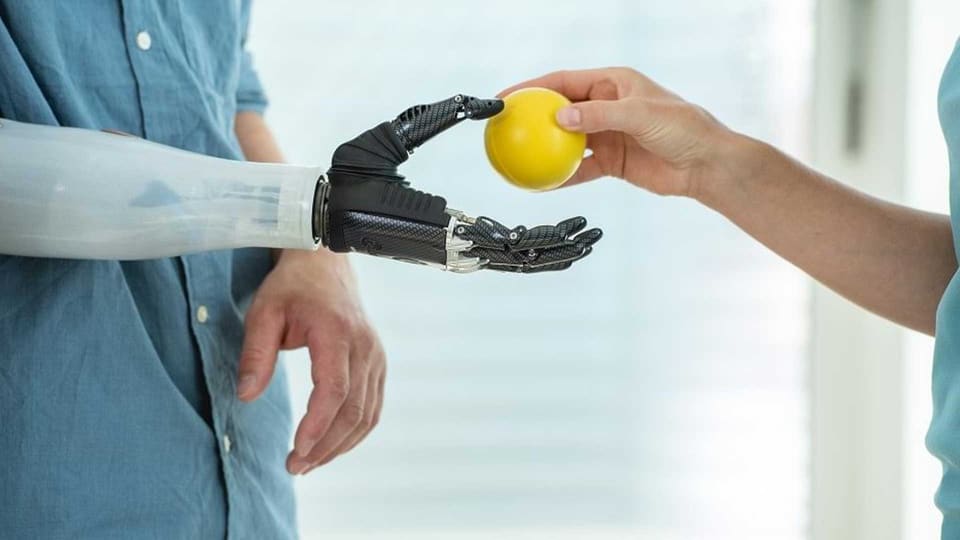
From a silicone prosthetic finger to a myoelectric hand: we design upper-limb prostheses that suit your amputation level, your work and your everyday life.
There is no single price, because the cost depends on the level of amputation, the type of socket, the suspension system, the knee and the foot. A bionic knee, for example, raises the total cost considerably. After your assessment we give you an itemised proposal and work out what EOPYY covers. Read our guide on how much a prosthetic leg costs.
Yes. For people insured in Greece, EOPYY reimburses upper and lower limb prostheses up to the maximum prices set in the Government Gazette for each component. You need a prescription from a doctor of the relevant specialty, and your co-payment is normally 25%. We are contracted with EOPYY and handle the process for you. See our page on EOPYY reimbursement.
For most lower limb prosthesis components, EOPYY provides for replacement every 5 years, while the silicone liner is replaced every year. In practice, the socket may need changing sooner if your residual limb changes significantly. Through regular check-ups we monitor the fit and let you know in good time.
Most users manage to walk safely and comfortably, but the result depends on the level of amputation, your physical condition and your training. A well-fitting socket and gait training with the help of your physiotherapist make the biggest difference. See also our guide to life after amputation and your first prosthesis.
Yes. We make silicone finger and partial-hand prostheses, coloured to match your skin tone, and for partial hand loss there are also myoelectric solutions such as Össur’s i-Digits Quantum. See our silicone hand and finger prostheses.
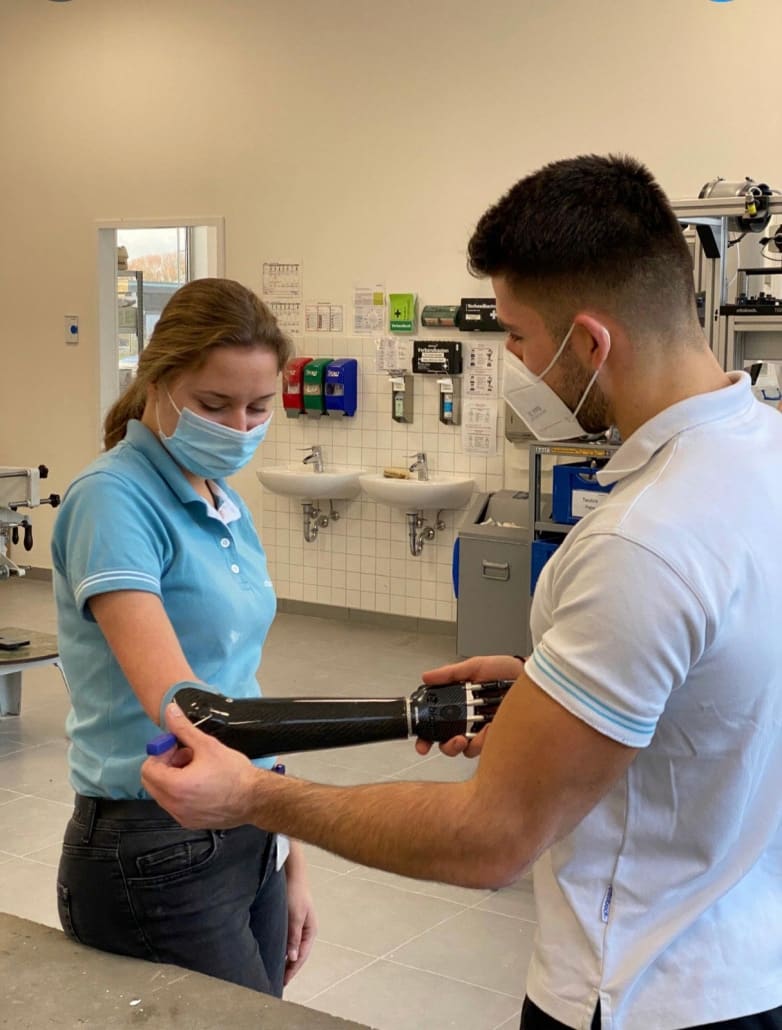
Microprocessor knees and feet from Ottobock and Össur that adapt to every step. Find out how they work, who they are suitable for and how the fitting process works.
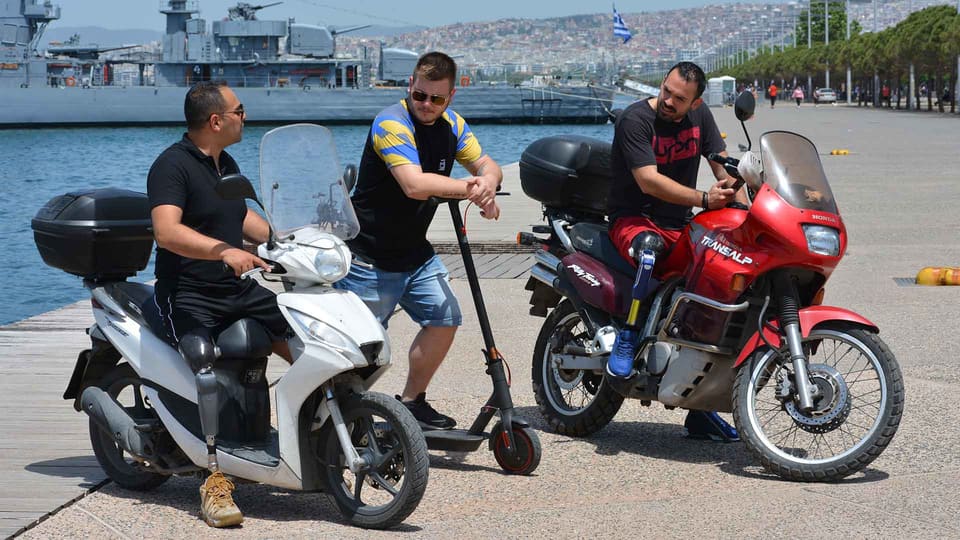
The price of a prosthetic leg is not a single number: it depends on the level of amputation, how active you are and the components. See what EOPYY covers and what is left for you to pay.
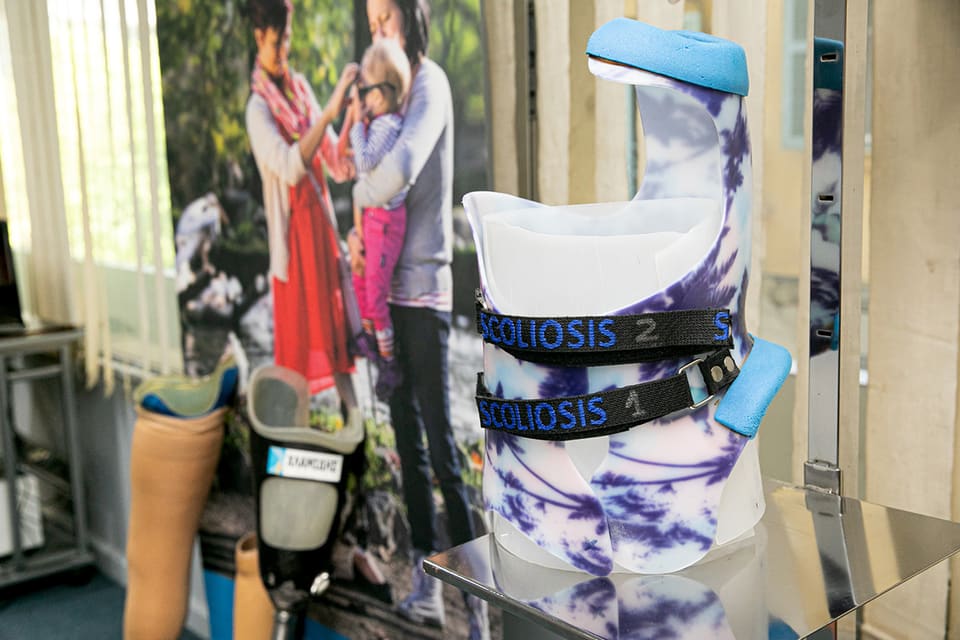
Who is entitled to EOPYY reimbursement in Greece, the steps involved, the documents you need and the maximum amounts set by the Government Gazette for prostheses, braces and orthoses.








Book an assessment on +30 2310 282 894. We will explain your options and what EOPYY covers.
Settings are saved on your device. Accessibility statement