
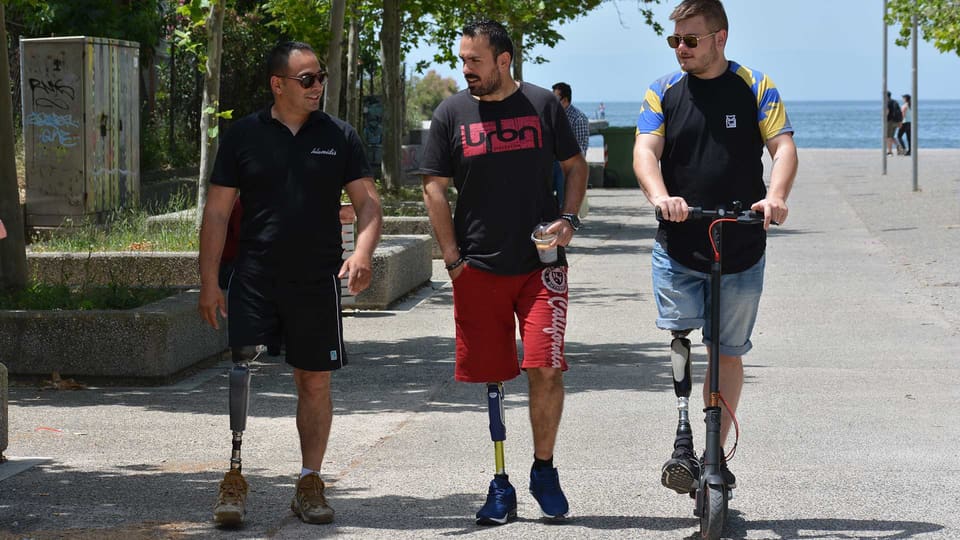
Prosthetic legs – above-knee (transfemoral) prostheses
Custom above-knee prostheses for amputation above the knee: from your first assessment and test socket to gait training and ongoing aftercare.
With knee disarticulation, the thigh bone is preserved in full. We design a socket that makes use of end-bearing on the residual limb for comfort when walking and sitting.
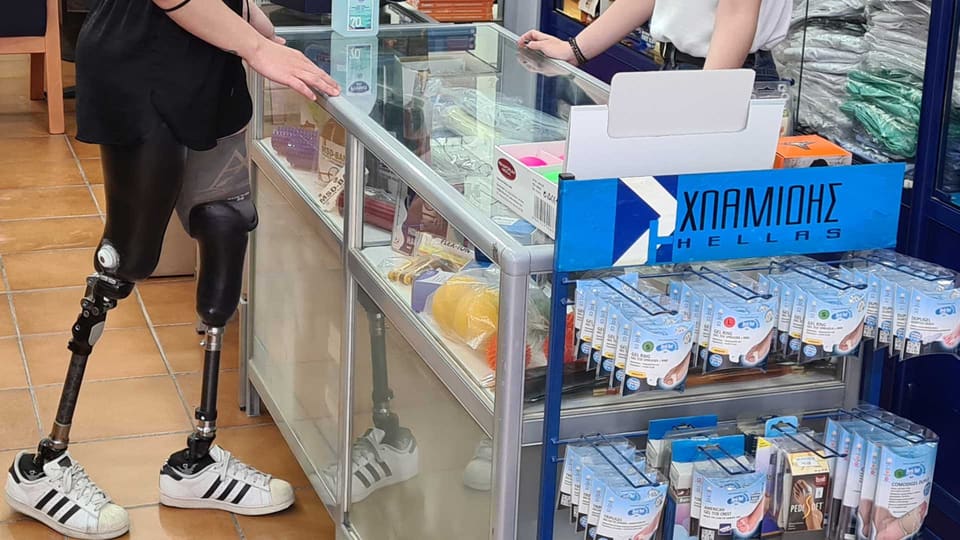
Knee disarticulation is an amputation carried out at the level of the knee joint, without cutting the thigh bone (femur). Compared with an above-knee amputation, the residual limb is longer and its end, the femoral condyles, can often bear weight.
This brings important advantages for the prosthesis, but also particular challenges that call for an experienced prosthetist. At Hlamidis Orthopaedic Center in Thessaloniki we make custom knee disarticulation prostheses with components from Ottobock, Össur and Endolite.
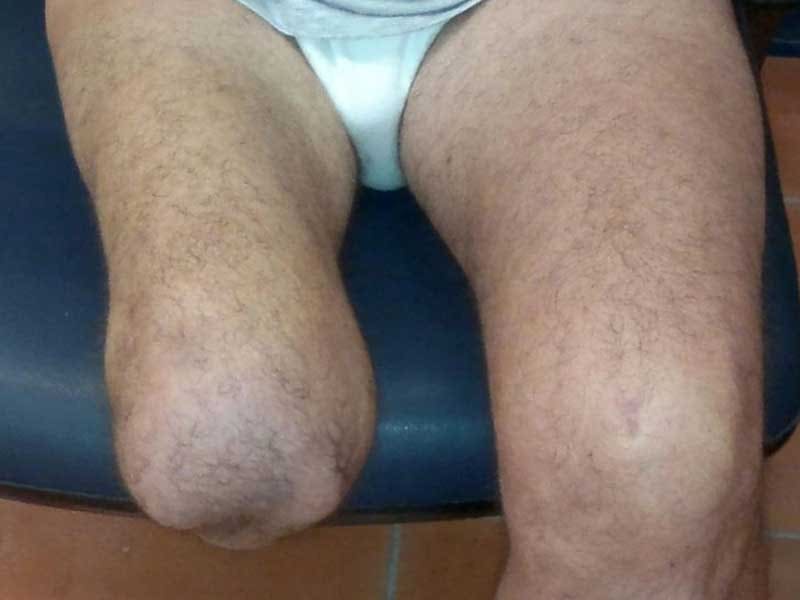
With knee disarticulation, the leg bears weight on the femoral condyles, at the lower end of the residual limb. This is where the prosthetic socket fits. With an above-knee amputation, by contrast, weight is transferred mainly high up, around the hip.
For the user this can mean:
The femoral condyles are wider than the rest of the residual limb. The socket has to pass over this wider end and lock securely above it. For this reason we use sockets with a soft inner lining or a special opening and, where suitable, a silicone liner.
Because the residual limb is long, there is little room left for the prosthetic knee. Knees designed specifically for disarticulation are therefore needed, so that the prosthetic knee sits as close as possible to the height of the natural knee, for a better appearance when you sit and a more balanced gait. The knee, from mechanical polycentric designs to bionic microprocessor knees, is chosen according to your activity level and goals, together with your treating physician.
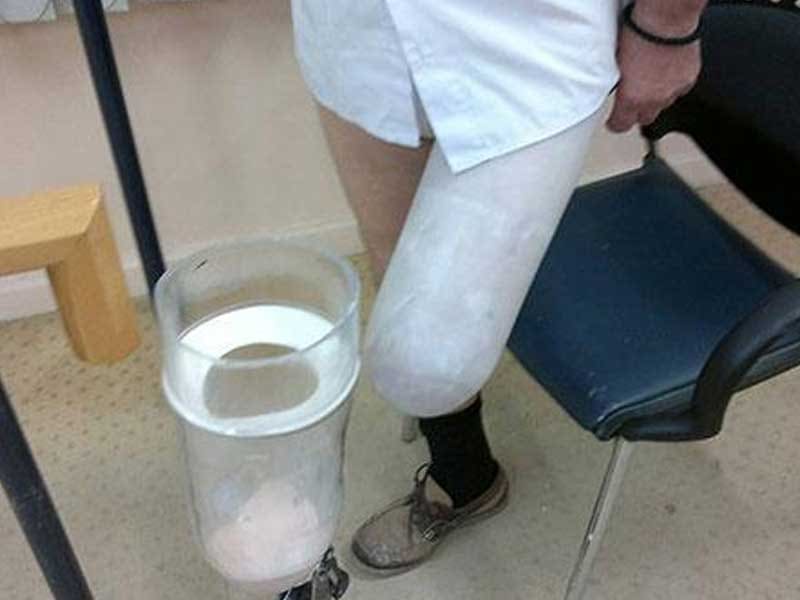
If you wish, the knee disarticulation prostheses we make can have a silicone cover in your skin colour. The result is discreet, with a natural colour and shape, so that the prosthesis does not stand out under your clothes. If you prefer something more personal, take a look at our UNYQ prosthetic covers.
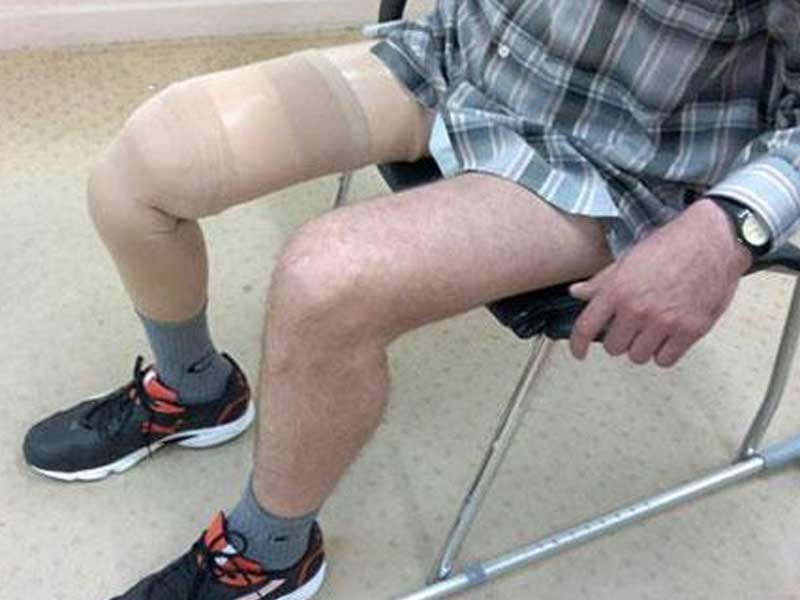
Because the end of the residual limb takes load with knee disarticulation, daily skin care is especially important. Check every evening for redness or irritation, keep your skin and liner clean and dry, and let us know straight away if you notice pain or a sore. Small changes in the volume of the residual limb are easily corrected by adjusting the socket, as long as they are spotted early.
The cost depends mainly on the knee, the foot, the type of socket and the cover. After your assessment we give you a written proposal. To find out what affects the price, read how much a prosthetic leg costs.
Is it covered by EOPYY? We are a contracted provider of EOPYY (ΕΟΠΥΥ), Greece’s national health insurance organisation. For people insured in Greece, components are reimbursed up to the maximum reimbursable price set in Government Gazette (ΦΕΚ) B' 1079/2022 (e.g. carbon above-knee socket €1,150, four-bar knee €776, hydraulic knee €2,026, every 5 years), on a prescription from a doctor of the relevant specialty and with a 25% co-payment (FEK B' 2106/2025, article 46). We check with you which category applies to your prosthesis. See our EOPYY reimbursement page. This information is correct as of the date of the last update.
If you are not insured in Greece, EOPYY reimbursement does not apply; you can pay privately, and any cover depends on your own insurer’s rules. Contact us and we will give you the information you need for your case.
See also our above-knee prostheses and all our lower limb prosthetics, or contact us on +30 2310 282 894.
It is an amputation carried out at the level of the knee joint, without cutting the thigh bone. The residual limb is long and its end, the femoral condyles, can often bear weight. That is why the prosthesis differs from an above-knee one, both in the socket and in the knee used.
With an above-knee prosthesis, weight is transferred mainly high up, around the hip, whereas with knee disarticulation it can be borne on the end of the residual limb. This often gives more comfort and better control. On the other hand, a special knee is needed, because there is less room available below the residual limb.
Because the residual limb is long, the prosthetic knee may sit slightly lower than your natural knee. We use knees designed for disarticulation to keep the difference as small as possible. How noticeable it is depends on your own anatomy, and we discuss it with you before choosing the components.
Yes, for people insured in Greece the prosthesis is reimbursed per component up to the maximum prices in FEK B' 1079/2022, on a prescription from a doctor of the relevant specialty and with a 25% co-payment. Most components are replaced every 5 years. Contact us so we can check what applies in your case, or see our EOPYY reimbursement page.
Custom above-knee prostheses for amputation above the knee: from your first assessment and test socket to gait training and ongoing aftercare.
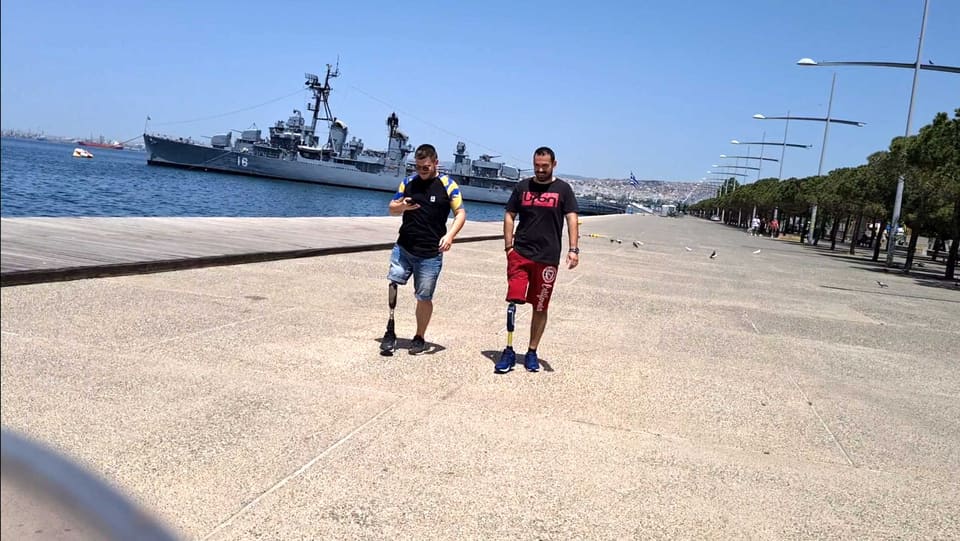
M.A.S. (Marlo Anatomical Socket) anatomical sockets for above-knee prostheses leave the buttock free, for more comfortable sitting, freedom of movement and a discreet look.
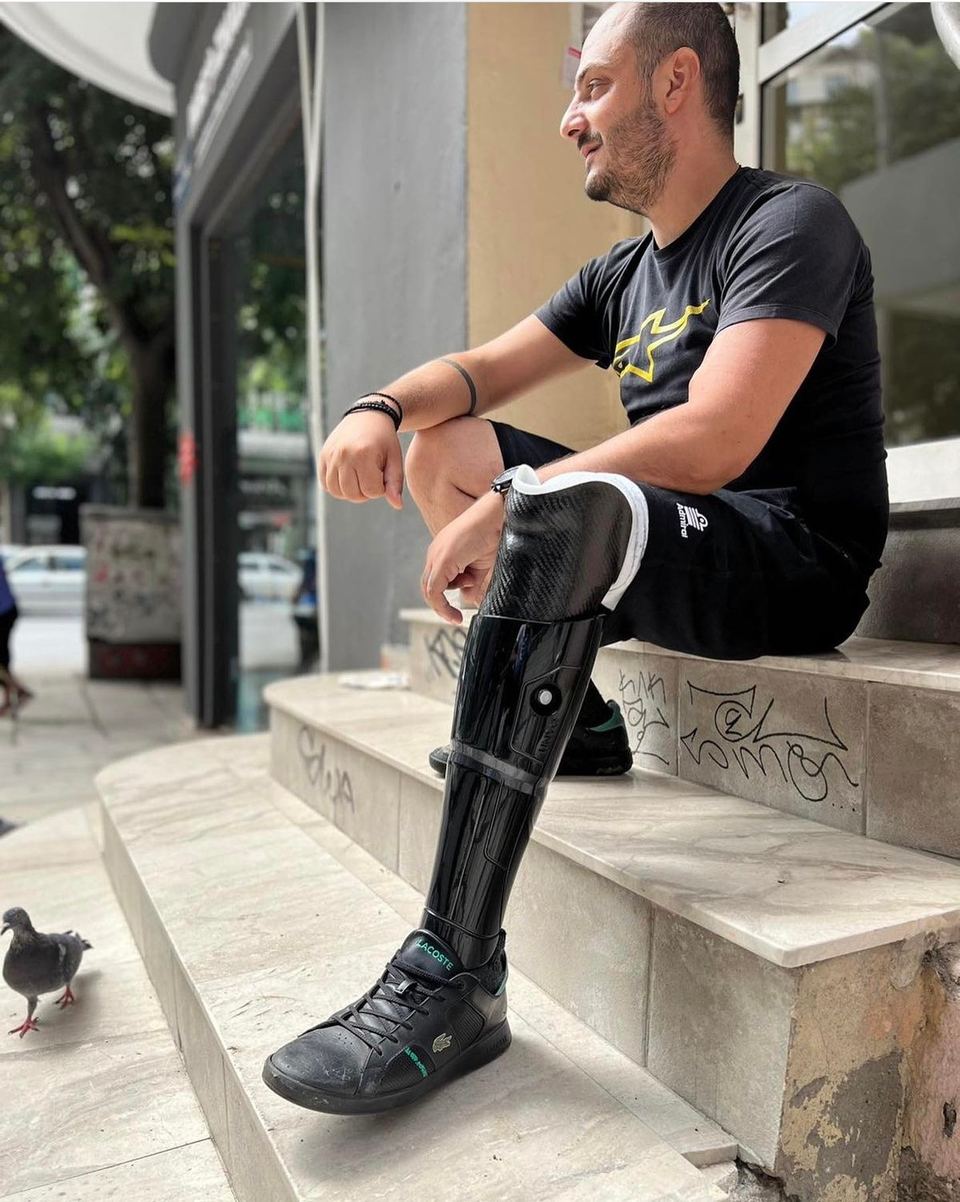
UNYQ covers are personalised, 3D-printed prosthetic covers that bring symmetry, protection and style to below-knee and above-knee prostheses.









Visit us at Egnatia 101 or call +30 2310 282 894 so we can design the knee disarticulation prosthesis that suits you.
Settings are saved on your device. Accessibility statement