
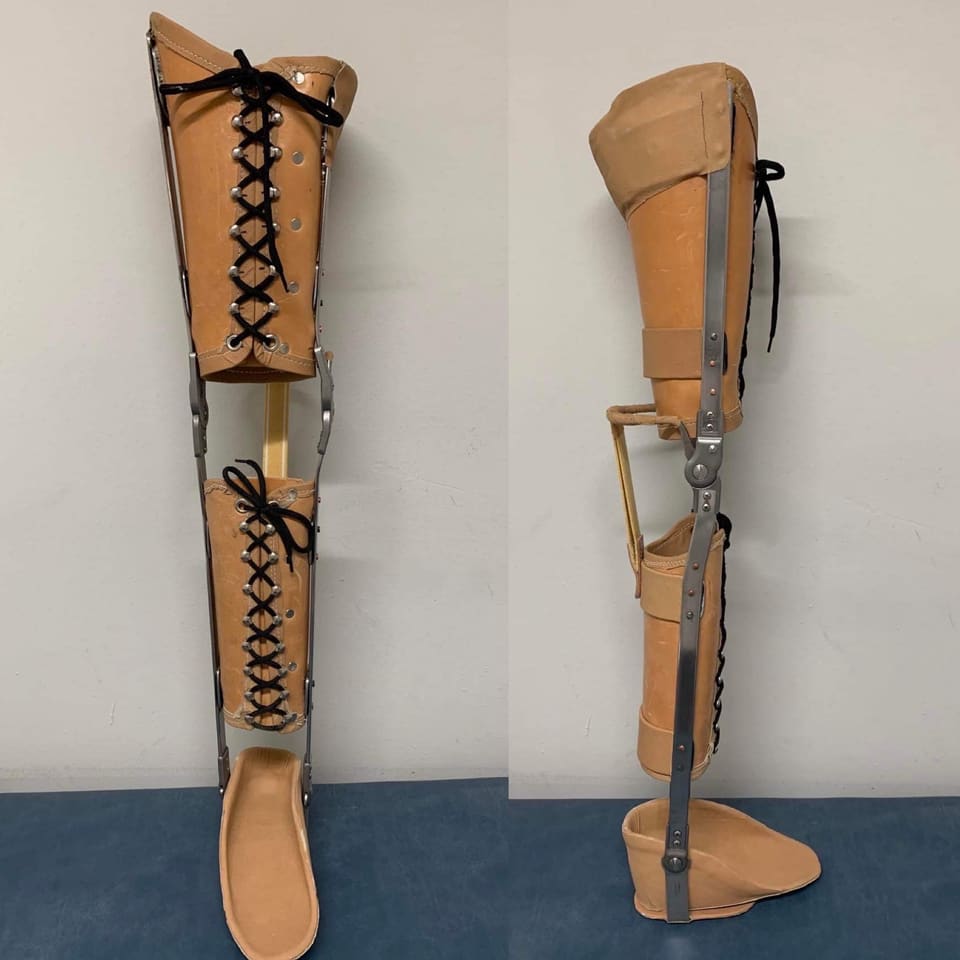
Custom upper- and lower-limb orthoses and braces
We make upper- and lower-limb orthoses and braces to your measurements, from an ankle-foot orthosis (AFO) to a full knee-ankle-foot orthosis (KAFO), always in line with your doctor's instructions.
We make custom Boston-type scoliosis and kyphosis braces and asymmetric Chêneau-type braces, measured with a scanner and always in close cooperation with your child's treating physician.
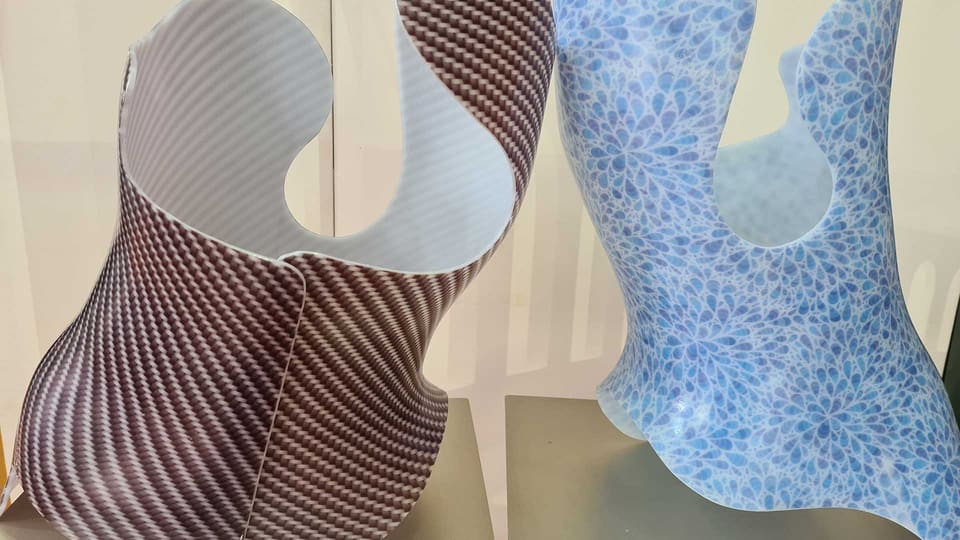
When an orthopaedic surgeon diagnoses scoliosis or kyphosis in your child, a spinal brace is often the next step. In our workshop at Hlamidis Orthopaedic Center, Egnatia 101, Thessaloniki, we make every scoliosis brace exclusively to the patient's own measurements, always in line with the treating physician's instructions. We know a diagnosis brings a lot of questions; we are here to answer them patiently, step by step.
Scoliosis is a developmental condition that causes the vertebrae to tilt sideways and rotate, so that the spine takes on an “S” or “C” shape. Depending on where the curve is, it is described as cervical, thoracic, thoracolumbar or lumbar; depending on the age at which it appears, as infantile, juvenile or adolescent.
The thoracic spine naturally has a backward curve (kyphosis) of up to about 40°. When the angle exceeds 40°, the kyphosis is considered abnormal and the doctor may recommend a kyphosis brace.
The decision is made by the orthopaedic surgeon, based on the clinical examination (e.g. Adam's forward bend test), the curve angle on the X-ray, the type of scoliosis and the child's stage of growth. The main aim of the brace is to stop the curve from progressing while the child grows, so that, where possible, surgery can be avoided.
The Boston-type brace is an underarm brace, made from thermoplastic material, that fastens at the back of the trunk. It is light and thin and applies corrective pressure at the right points on the chest, and thanks to its design it does not restrict breathing. It is worn under clothing, even for up to 23 hours a day when the doctor prescribes it.
The asymmetric Chêneau-type brace does not rely on pressure alone. It has pressure points and expansion spaces, so that the body itself moves in the direction of correction. Its asymmetric design means it can also address uneven shoulders or an uneven pelvis, and it may also help with hypokyphosis (flatback), when the spine loses its natural curve and “straightens”.
Asymmetric braces are usually smaller and lighter and open at the front, which gives children more comfort and independence in everyday life.
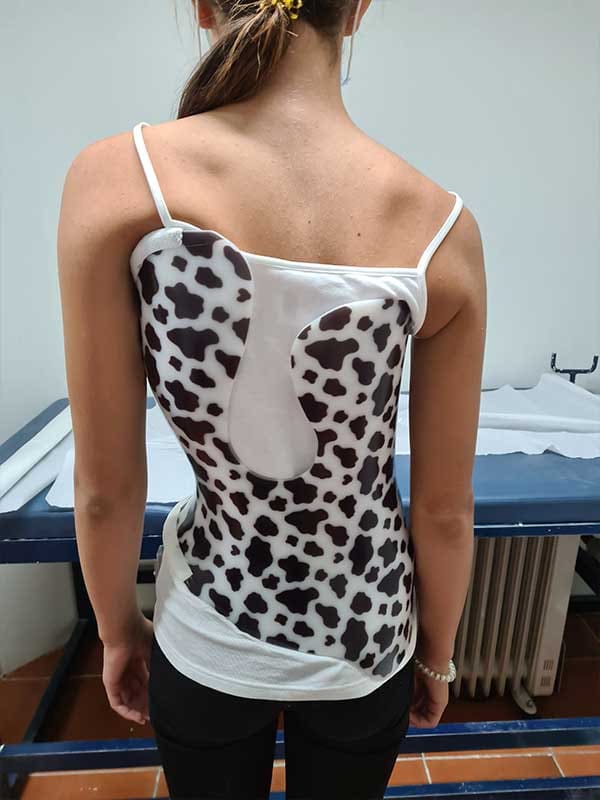
Many parents search for a “kyphosis belt” or “scoliosis belt”. A posture belt can remind you to hold a good posture, but it does not replace a custom corrective brace when the doctor has diagnosed scoliosis or abnormal kyphosis. Ask us and we will explain what suits your situation, always in consultation with your doctor.
The cost of a scoliosis brace depends mainly on its type (Boston or Chêneau), its size and the particular features of the curve. As a contracted provider of EOPYY (ΕΟΠΥΥ), Greece's national health insurance organisation, we fill your doctor's prescription for people insured in Greece. Under the Unified Benefits Regulation (Government Gazette (ΦΕΚ) B' 2106/2025, Article 46), you need a prescription from a doctor of the relevant specialty, the brace must be supplied by a contracted provider, and the patient pays a 25% co-payment on the reimbursement price.
| Type of brace | Maximum reimbursable price* | Replacement |
|---|---|---|
| Boston | €595.00 | Up to age 16: every 6 months · Ages 16–18: every year |
| Chêneau | €669.00 | Up to age 16: every 6 months · Ages 16–18: every year |
*Maximum reimbursable price (including VAT) under Government Gazette (ΦΕΚ) B' 1079/2022. No replacement is provided for adults. These are maximum amounts, not guaranteed amounts; the final reimbursement depends on the prescription and on EOPYY's review. The information is correct as of the date this page was last updated. See the step-by-step process on our EOPYY reimbursement for orthopaedic products page. If you are not insured in Greece, EOPYY reimbursement does not apply; you can pay privately, and any cover depends on your own insurer's rules – contact us and we will give you the information you need for your case.
For the types of brace, everyday life with a brace and the questions parents ask most often, read our detailed guide to scoliosis braces and the articles in our Scoliosis & braces section. If you are interested in other orthoses, see all the orthoses and braces we make, such as our upper- and lower-limb orthoses.
Book an appointment on +30 2310 282 894 or contact us; we will explain the whole process from the start.
The cost depends on the type of brace (Boston or Chêneau), its size and the curve. With a doctor's prescription, the maximum reimbursable price under Government Gazette (ΦΕΚ) B' 1079/2022 is €595.00 for a Boston brace and €669.00 for a Chêneau brace, with a 25% co-payment for people insured with EOPYY. Call us on +30 2310 282 894 and we will explain what applies in your case.
Yes, for people insured in Greece, provided there is a prescription from a doctor of the relevant specialty with the appropriate diagnosis and the brace is supplied by a contracted provider, such as our company. The patient pays 25%. For children up to age 16, replacement every 6 months is provided for. See our EOPYY reimbursement page.
The Boston is a symmetrical underarm brace made from thermoplastic material; it applies corrective pressure and fastens at the back. The Chêneau is asymmetric: it combines pressure points with expansion spaces, so that the body moves towards correction, and it opens at the front. Your doctor decides which one is right.
The wearing schedule is set by the treating physician and differs from child to child. A Boston-type brace can be worn under clothing for up to 23 hours a day, when this is prescribed. When we hand over the brace, we give you instructions on getting used to it gradually and on skin care.
The main aim of the brace is to stop the curve from progressing while the child is growing. The result depends on the angle, the type of scoliosis, the child's age and how consistently the brace is worn, so nobody can promise a specific correction. Your doctor monitors progress with regular check-ups.
The thoracic spine naturally has a kyphosis of up to about 40°. When the angle exceeds 40°, the kyphosis is considered abnormal and the orthopaedic surgeon may recommend a kyphosis brace. We make it to measure, using a scanner, following the surgeon's instructions. In the EOPYY schedule, kyphosis braces belong to the same category as scoliosis braces.
We make upper- and lower-limb orthoses and braces to your measurements, from an ankle-foot orthosis (AFO) to a full knee-ankle-foot orthosis (KAFO), always in line with your doctor's instructions.
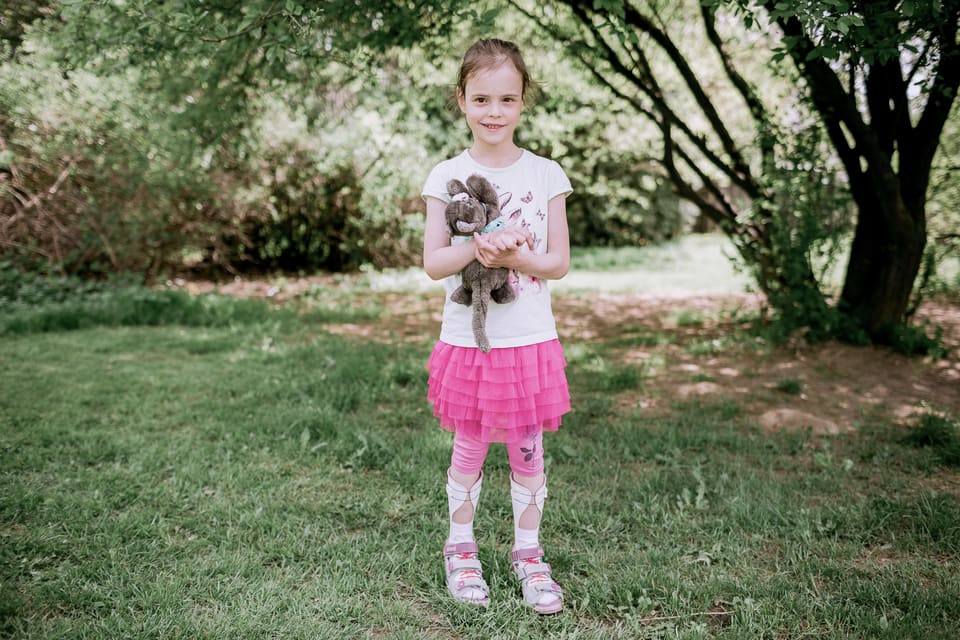
Thin, lightweight ankle-foot braces for children, designed from a 3D scan and printed on a 3D printer, so that your child can feel the difference with every step.



Bring your doctor's prescription and we will explain the options, how we take measurements and the EOPYY process. Call +30 2310 282 894.
Settings are saved on your device. Accessibility statement