After amputation: a step-by-step guide to your first prosthetic limb
Amputation is not the end of the road. See, stage by stage, what usually happens on the way to your first prosthetic limb: healing, residual limb care, the prosthesis, walking and EOPYY.
If you or someone close to you has recently had a leg amputation, it is natural to feel fear, grief and a lot of questions all at once. Will I walk again? When will the prosthetic limb be made? Who does what? In this guide, Hlamidis Orthopaedic Center describes, in plain language, the path that is usually followed from surgery to the first steps with a prosthesis. But everyone is different: timings and decisions are always set by your treating physician and the rehabilitation team.
At a glance
- After amputation, the first priorities are wound healing and shaping the residual limb, usually with an elastic bandage or a compression sock (shrinker), following your doctor's instructions.
- Phantom limb pain or sensations are common and are managed by your doctor.
- The first prosthesis is made when the residual limb is ready; the timing varies from case to case.
- Next come measurements, a test socket, fitting and gait training with a physiotherapist.
- For cover from EOPYY (ΕΟΠΥΥ), Greece's national health insurance organisation, you need a doctor's prescription and a contracted provider.
The journey in stages
The table below gives a general picture. Timings are indicative and vary widely depending on the cause of the amputation (e.g. vascular disease, diabetes, trauma), age, healing and general health.
| Stage | What happens | Who helps |
|---|---|---|
| Before surgery (when there is time) | Information, questions, a first visit to the workshop | Surgeon, prosthetist |
| First few weeks | Wound healing, pain control, getting moving | Medical and nursing team, physiotherapist |
| Shaping the residual limb | Reducing swelling, stabilising shape and volume | Doctor, physiotherapist, prosthetist |
| First prosthesis | Measurements, test socket, fitting | Prosthetist, doctor (prescription) |
| Rehabilitation | Gait training, strengthening, socket adjustments | Physiotherapist, prosthetist |
| Everyday life | Regular check-ups, maintenance, replacements | Prosthetist, doctor |
Before surgery: if there is time
Not all amputations are planned. But when there is time, for example with severe vascular disease or a diabetic foot, it is worth asking your questions early. Ask your surgeon at what level the amputation will be carried out (e.g. below or above the knee) and what that means for the prosthesis. You can also contact our workshop: meeting a prosthetist and seeing a prosthetic limb up close helps many people face surgery with less anxiety.
The first few weeks: healing and residual limb care
The residual limb (sometimes called the stump) is the part of the leg that remains after amputation. In the first few weeks, the priority is for the wound to heal properly and for pain to be controlled. The medical team will give you instructions on wound dressings, hygiene and which movements are allowed.
Some general principles that are often recommended, always within your doctor's instructions:
- Positioning the residual limb: healthcare professionals often advise avoiding positions that encourage contractures, such as a pillow under the knee or sitting for hours with the hip bent. Contractures make it harder to use a prosthesis later on.
- Daily skin inspection: redness, swelling, discharge or fever should be reported to your doctor straight away.
- Getting moving: the physiotherapist usually starts exercises early to maintain strength and range of movement in the other leg, the trunk and the arms.
Your other leg also needs special attention, especially when the amputation was caused by diabetes or vascular disease. Appropriate check-ups and, where needed, therapeutic shoes for people with diabetes help to protect it.
Shaping the residual limb: bandaging and compression socks
After surgery the residual limb is swollen. For it to fit into a socket, the swelling has to go down and the shape has to stabilise. That is why, once your doctor allows it, an elastic bandage applied with a special wrapping technique or a compression sock (shrinker) of the right size is usually used. Some centres use other methods too, at the discretion of the medical team.
The right technique matters: a bandage that is too tight at the top and loose at the bottom can do more harm than good. Ask the nursing team or the physiotherapist to show you how it is done, and do not hesitate to ask again. We can also help you choose the right size of compression sock.
Phantom limb: sensations and pain
After amputation, many people still "feel" the leg that is no longer there: itching, tingling, the position of the toes. This is called phantom limb sensation and it is a common, normal response of the nervous system. When these sensations are painful, it is called phantom limb pain.
This pain is real and does not mean it is "all in your head". There are various approaches to managing it, with and without medication, chosen by your doctor together with the rehabilitation team. Always report the pain, even if it seems strange to you; do not put up with it in silence.
When can the first prosthetic limb be made?
This is one of the most common questions, and the answer is: when the residual limb is ready and your doctor gives the "green light". In many cases this happens within a few weeks to a few months of surgery, but the timing depends on healing, general health and the cause of the amputation. In some cases, for example with delayed healing, more time is needed.
The first prosthesis is often temporary: because the volume of the residual limb keeps decreasing in the first few months, the socket needs adjusting or replacing. Once the residual limb has stabilised, the definitive prosthesis is made.
Your first visit to our workshop
At your first appointment at our workshop, at Egnatia 101 in Thessaloniki, the prosthetist will:
- ask about your medical history, your life before the amputation, your work and your goals;
- examine your residual limb: length, shape, skin, scar, sensitive areas;
- explain what a prosthesis is made of and which options suit your level of amputation, e.g. a below-knee (transtibial) prosthesis for an amputation below the knee or an above-knee (transfemoral) prosthesis for an amputation above the knee;
- tell you about the EOPYY process and what the prescription will need to state.
Bring someone you trust with you, and a list of your questions. No question is a "silly" question.
Measurements, test socket and fitting
The socket is the most individual part of the prosthesis and the most important for comfort. It is made in stages:
- Measurements and a cast of the residual limb, using the methods that suit your case.
- A test socket, often made of transparent material, so that we can see where it presses and where it leaves space. More than one fitting may be needed.
- Choosing the components: silicone liner, suspension system, prosthetic foot and, for above-knee prostheses, a knee.
- Alignment: the position of the components is adjusted so that walking is safe and as natural as possible.
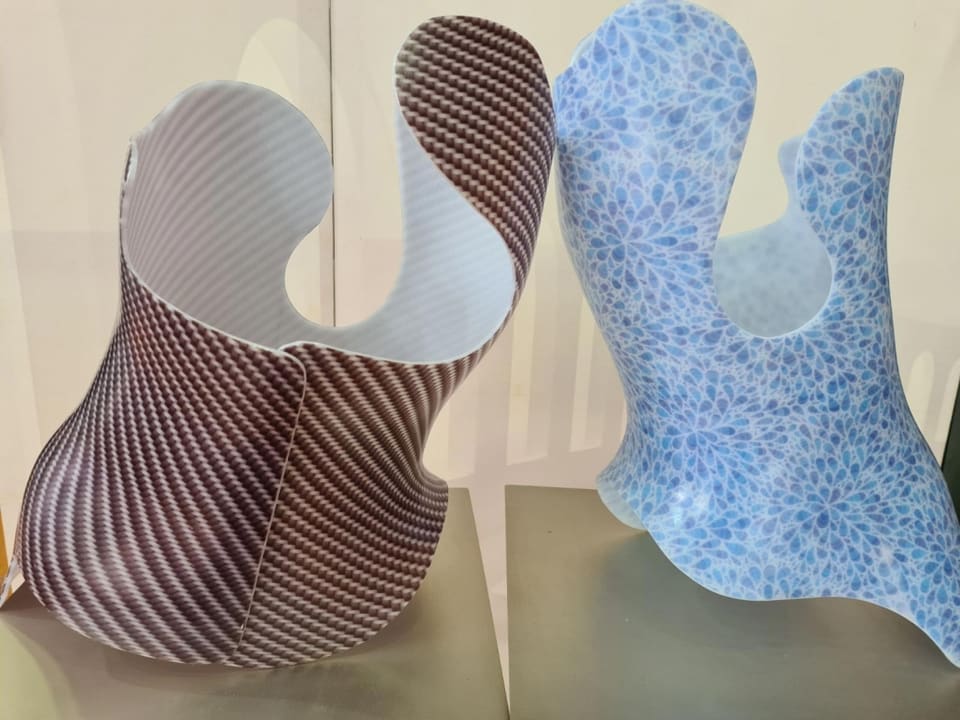
For above-knee amputations, M.A.S. anatomical sockets are one of the solutions that may be discussed.
The first steps: physiotherapy and gait training
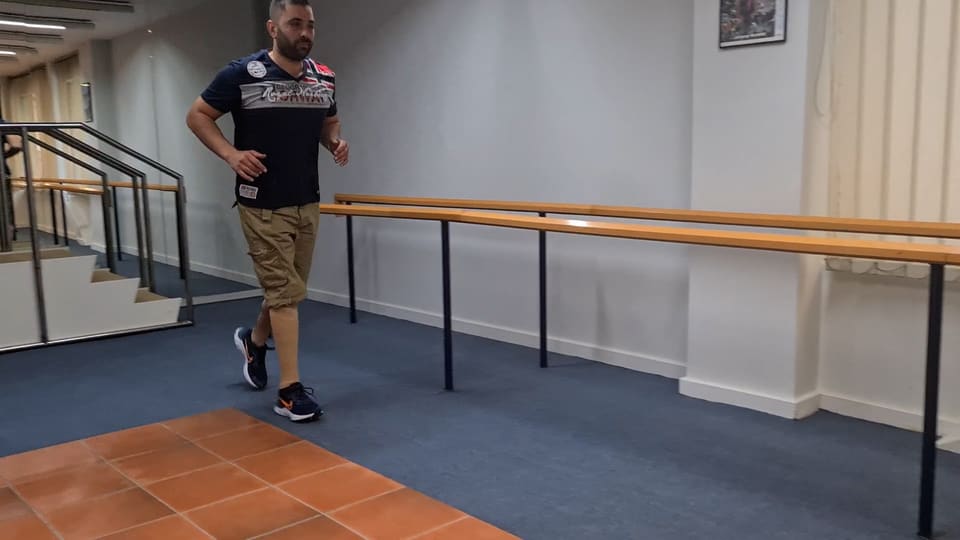
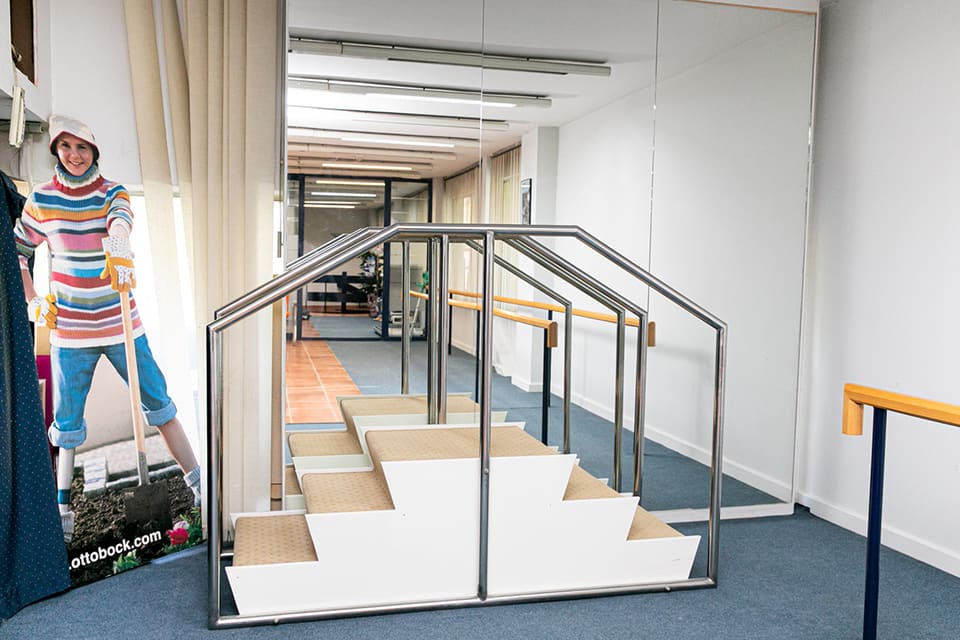
Putting on the prosthesis is just the beginning. Rehabilitation after lower-limb amputation includes learning the right way to put on and take off the prosthesis, balance, weight shifting, walking between parallel bars, and gradually walking with or without walking aids, on stairs, ramps and uneven ground.
Training is carried out together with a physiotherapist. Our premises include a dedicated physiotherapy and prosthetic-training area, where the necessary adjustments to the prosthesis are also made as you progress. At first the prosthesis is worn for short periods, and the wearing time is increased gradually, with care for the skin of the residual limb.
Once you have progressed, ask your physiotherapist and prosthetist about suitable exercise and physical activities with a prosthetic limb.
The paperwork: EOPYY and other procedures
Paperwork can feel like a mountain at an already difficult time. The basics for the prosthesis, if you are insured in Greece:
- EOPYY covers lower-limb prostheses with a prescription from a doctor whose specialty matches your condition, supplied by a contracted provider.
- The insured person generally pays a 25% contribution on the reimbursement price, while certain categories are exempt.
- Reimbursement is made up to maximum prices per component, as set by Government Gazette (ΦΕΚ) B' 1079/2022, and most components are replaced every 5 years.
You will find detailed information on our page about EOPYY reimbursement and in our guide "How much does a prosthetic leg cost?". For matters such as disability certification through KEPA (the Greek disability certification centres) and allowances, check with the relevant authorities, as the conditions vary. Contact us and we will check what applies to your case for the prosthesis. This information is valid as of the date of the update.
If you are not insured in Greece, EOPYY reimbursement does not apply; you can pay privately, and any cover depends on your own insurer's rules. Contact us and we will give you the information you need for your case.
A checklist of questions for your appointments
At appointments it is easy to forget what you wanted to ask. Keep this list on your phone or print it out.
For your treating physician
- How is the healing going? What signs should worry me?
- When and how should I start bandaging or wearing the compression sock?
- How will we manage pain, and phantom limb pain if it appears?
- When will I be ready for my first prosthesis? Will you issue the prescription?
- Do I need a referral for physiotherapy or psychological support?
For the prosthetist
- Which prosthesis options suit my level of amputation and my activity level?
- How many socket fittings are usually needed, and how long does the process take?
- What does EOPYY cover in my case, and what will my own contribution be?
- How do I look after the prosthesis and the silicone liner? How often does it need checking?
- What should I do if the socket starts to press or feel loose?
Psychological support: not a luxury
Amputation is not just a physical change. Grief, anger, anxiety about the future, and worries about body image or work are common feelings. Support from a psychologist or psychiatrist, when you need it, is part of rehabilitation, not a sign of weakness. Talk to your doctor about a referral.
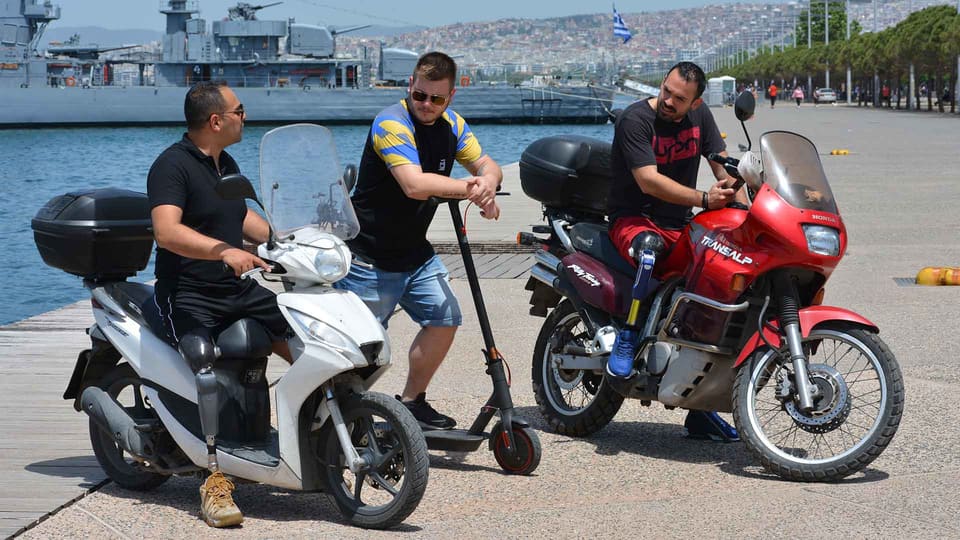
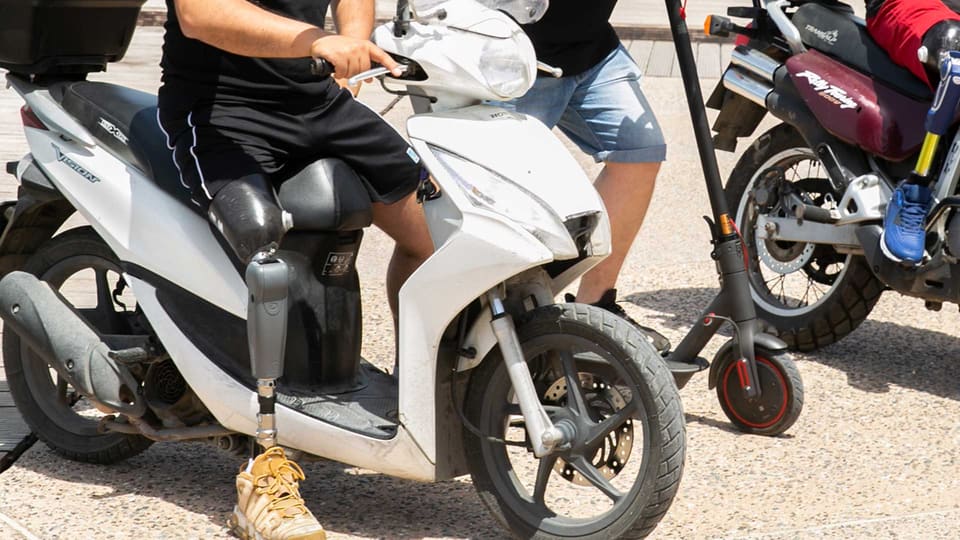
Many people also find strength in meeting others who already live with a prosthetic limb. At our workshop you will meet people who walk, work, ride motorbikes and play sport with their prosthesis.
The family's role
The family is a valuable ally, as long as they help without "doing everything" for the patient. Some practical ideas:
- Go with them to appointments and take notes.
- Learn the correct way to bandage the residual limb and look after the skin yourself.
- Make the home safer: remove rugs, make sure there is good lighting and grab rails where needed.
- Encourage independence, even if some things take longer at first.
- Look after yourself too: caring is tiring.
When the patient is a child
Children often adapt remarkably quickly to a prosthesis, but they grow, so the prosthesis needs more frequent adjustments and replacements. For certain items, such as Chopart or Lisfranc partial-foot prostheses, EOPYY's annex provides for replacement every 6 months up to the age of 16. Parents can find an overview of the prosthetic limbs we make on our prosthetics page.
How we can help
Since 1952, three generations of the Hlamidis family have supported people in Thessaloniki and across Greece on the journey after amputation. We are contracted with EOPYY for the products we make, and we work with manufacturers such as Ottobock and Össur. You can talk to us at any stage, even before surgery.
Call us on +30 2310 282 894 or book an appointment. We will answer your questions patiently and honestly.
This article is for information only and does not replace medical advice. For any decision about your treatment, consult your treating physician.