
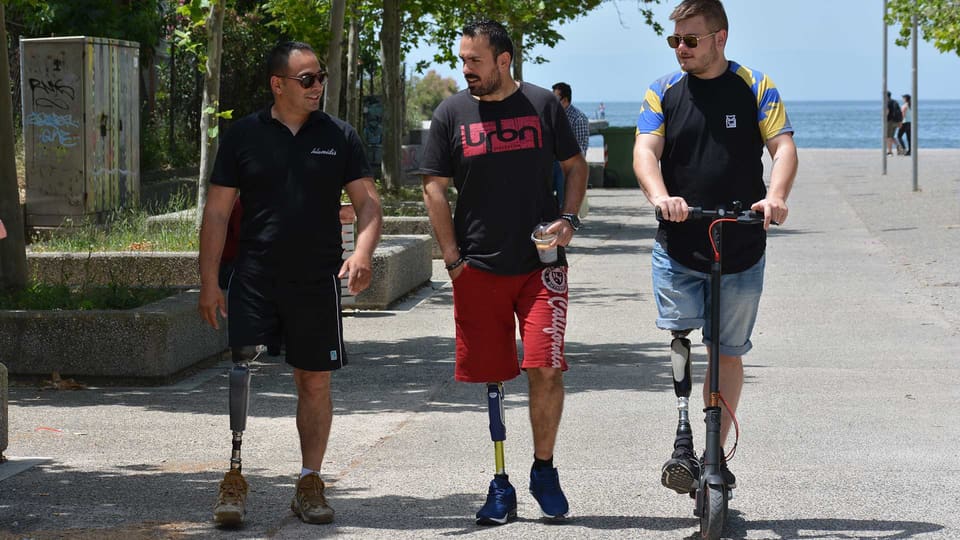
Prosthetic legs – above-knee (transfemoral) prostheses
Custom above-knee prostheses for amputation above the knee: from your first assessment and test socket to gait training and ongoing aftercare.
M.A.S. (Marlo Anatomical Socket) anatomical sockets for above-knee prostheses leave the buttock free, for more comfortable sitting, freedom of movement and a discreet look.
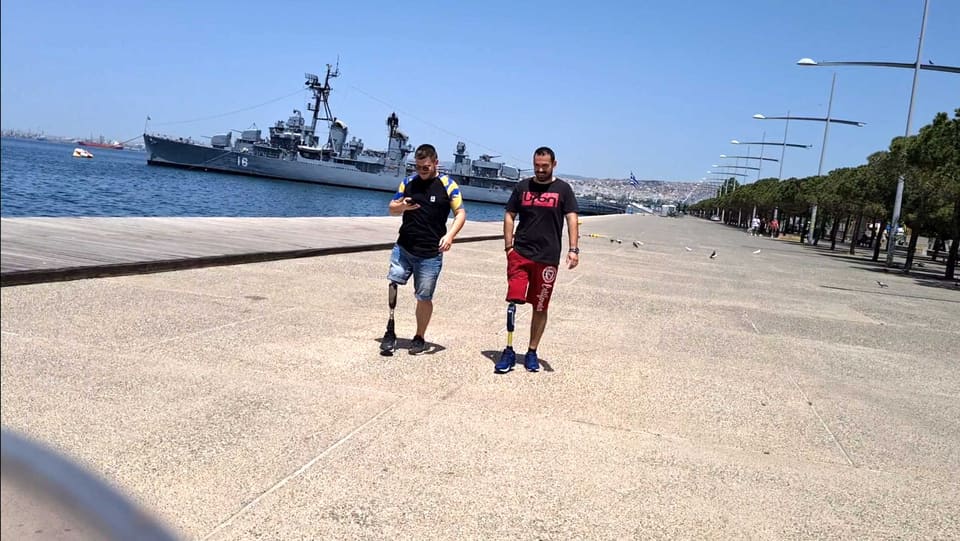
The socket is the most important part of an above-knee prosthesis: it is where your body “meets” the prosthesis. M.A.S. (Marlo Anatomical Socket) anatomical sockets are regarded as one of the most significant developments in above-knee sockets, because they address a problem that troubled users for years: discomfort when sitting and restricted hip movement.
The M.A.S. socket is named after its creator, the prosthetist Marlo Ortiz from Guadalajara, Mexico. By studying the anatomy of the pelvis and the function of the hip, he designed a socket that contains the ischial tuberosity and the ischial ramus, the bone you sit on, from the inside. In this way the socket is stabilised on the skeleton rather than on the soft tissues.
As a result, the back of the socket can be lowered: the buttock is left largely free, with no plastic underneath it.
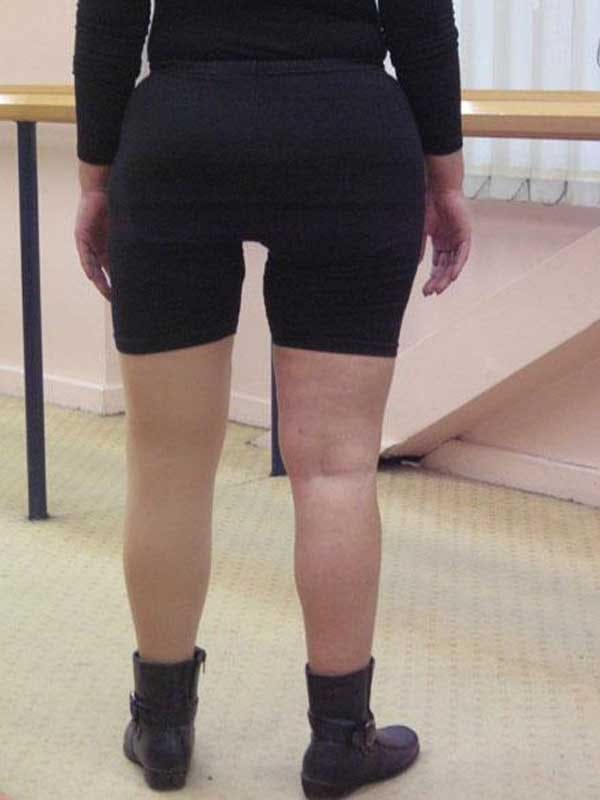
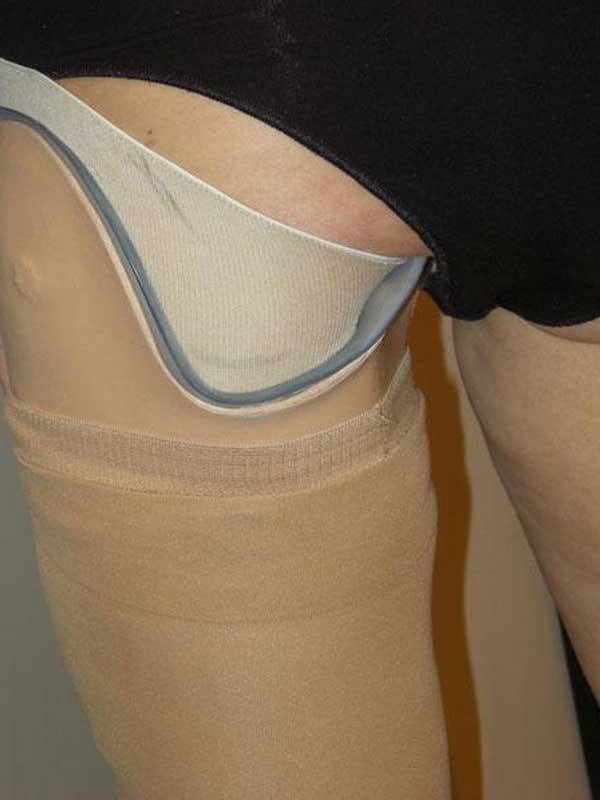
The MAS Soft version is intended mainly for people with challenging residual limbs, for example soft-tissue (flabby) residual limbs or those with muscle atrophy. Its softer construction hugs the residual limb, and the aim is to activate the muscles of a weak above-knee residual limb rather than leave them inactive.
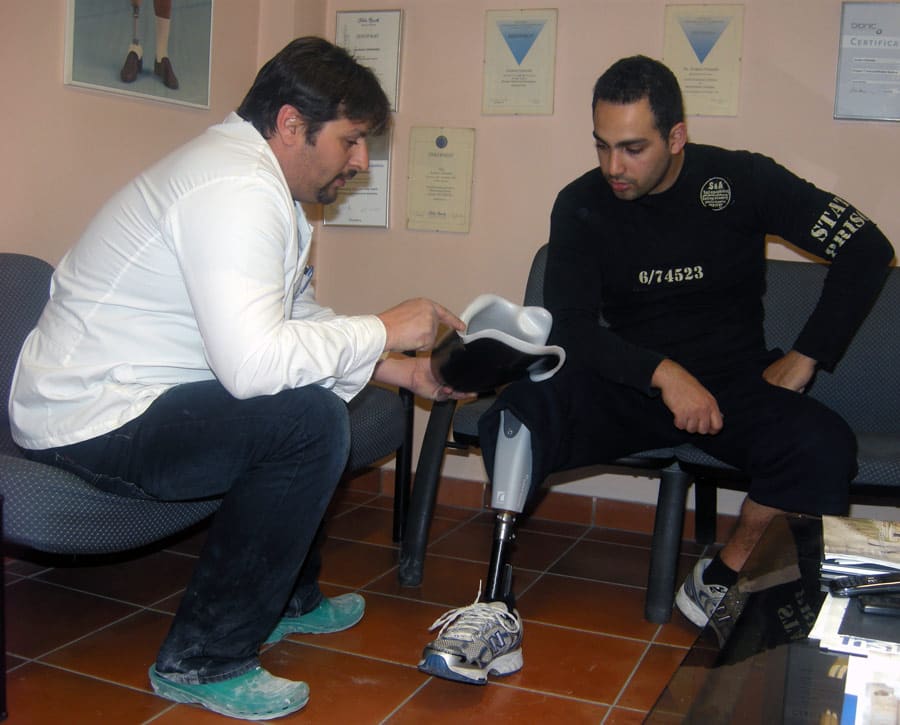
The M.A.S. socket requires precise measurement, experience and several fittings. It does not suit every residual limb: its length, the condition of the tissues, your weight and your activity level all play a part. After an assessment we will tell you honestly whether M.A.S. or another socket, such as a socket with a vacuum system, is the best choice. The decision is made together with your treating physician.
The process includes a cast, one or more test sockets and final manufacture. The socket can be combined with any suitable knee, from mechanical designs to bionic microprocessor knees.
Many users notice the biggest difference in the simple moments of the day: sitting at a desk or in the car, bending down to tie their shoes or wearing close-fitting trousers. Because the socket is stabilised on the skeleton, the prosthesis follows the movements of the pelvis more closely. There is, however, a period of adjustment, and proper gait training is needed, which we provide in the dedicated area at our premises.
We have been making prosthetic limbs in Thessaloniki since 1952, and we believe the socket is the part that determines whether a prosthesis succeeds. Ioannis Hlamidis, the third generation of the family, trained at the Ottobock Academy, and every socket is designed and checked in our own workshop.
Is it covered by EOPYY? For people insured in Greece, EOPYY (ΕΟΠΥΥ), Greece’s national health insurance organisation, reimburses the socket as part of the prosthesis. According to Government Gazette (ΦΕΚ) B' 1079/2022, the maximum reimbursable price is €1,150 for a carbon above-knee socket and €920 for a resin and carbon socket, with replacement every 5 years. A prescription from a doctor of the relevant specialty is required, and the co-payment is 25% (FEK B' 2106/2025, article 46). For the overall cost, read how much a prosthetic leg costs and our EOPYY reimbursement page. This information is correct as of the date of the last update.
If you are not insured in Greece, EOPYY reimbursement does not apply; you can pay privately, and any cover depends on your own insurer’s rules. Contact us and we will give you the information you need for your case.
Find out more about above-knee prostheses, see all our lower limb prosthetics or book an appointment on +30 2310 282 894.
It is the M.A.S. anatomical above-knee socket, named after its creator, the Mexican prosthetist Marlo Ortiz. The socket is supported on the ischial tuberosity and the ischial ramus from the inside, so that it is stabilised on the skeleton and leaves the buttock largely free.
Conventional sockets often have plastic under the buttock or high trim lines that restrict hip movement. M.A.S. has a lower posterior trim line, so sitting is more comfortable, the range of movement is greater and the look is more natural under your clothes. However, it does not suit every residual limb.
It is a softer version of the M.A.S. socket, intended mainly for people with challenging residual limbs, for example soft-tissue (flabby) residual limbs or those with muscle atrophy. Its aim is to hug the residual limb properly and to activate the muscles of a weak above-knee residual limb. Whether it suits you is something we judge after an assessment.
Often, yes. The socket is a separate component and can be replaced while the knee and foot stay, provided they are in good condition. For people insured in Greece, EOPYY reimburses the socket as a separate component, with replacement every 5 years according to FEK B' 1079/2022. Contact us so we can check your own case.
The number varies from person to person. Usually one or more test sockets are needed, so that we can check the fit when sitting, standing and walking before final manufacture. Precision at this stage is what makes the difference to how comfortable the socket is for years to come.
Custom above-knee prostheses for amputation above the knee: from your first assessment and test socket to gait training and ongoing aftercare.
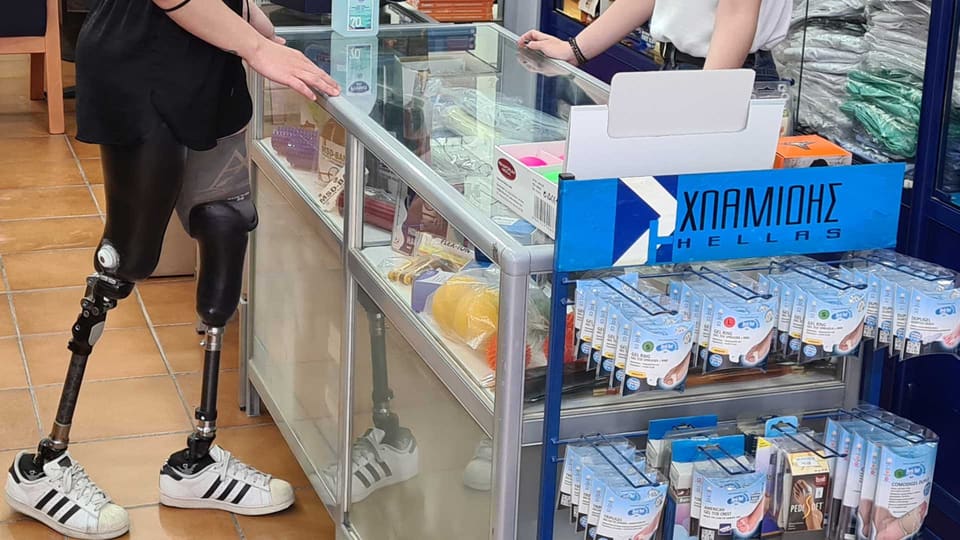
With knee disarticulation, the thigh bone is preserved in full. We design a socket that makes use of end-bearing on the residual limb for comfort when walking and sitting.

The Genium is Ottobock’s most advanced bionic knee, designed to come as close as possible to natural walking: step-over-step stairs, obstacles, slopes and walking backwards.









Book an assessment at Egnatia 101 or call +30 2310 282 894.
Settings are saved on your device. Accessibility statement