Scoliosis braces: everything you need to know (types, wearing hours, cost & EOPYY)
A guide for parents and teenagers: what a scoliosis brace is, Boston, Chêneau and asymmetric types, how many hours a day it is worn, living with it, cost and EOPYY.
If you or your child has been diagnosed with scoliosis, you have probably already heard about scoliosis braces. A scoliosis brace (or spinal orthosis) is an orthopaedic device worn around the trunk and, in line with the doctor's instructions, it can help stop the curve of the spine from getting worse while the child grows. In this guide, Hlamidis Orthopaedic Center answers the questions we hear every day from parents and teenagers: what types there are, how many hours a day a brace is worn, how it is made, what living with it is like, how much it costs and what EOPYY covers.
At a glance
- A scoliosis brace is custom made for each patient, after a medical examination and a prescription.
- The best-known types are the Boston, the Chêneau, asymmetric dynamic braces and night-time braces.
- Wearing hours are set by the doctor; often it is many hours a day.
- EOPYY, Greece's national health insurance organisation, reimburses the brace up to a maximum price (e.g. Boston €595, Chêneau €669) with a 25% co-payment, and replaces it every 6 months up to age 16.
- In our workshop, measurements are taken with a scanner, for a better fit.
What scoliosis is and when a brace is needed
Scoliosis is a sideways curve of the spine, often accompanied by rotation of the vertebrae. It usually appears between early childhood and adolescence and, depending on where the curve is, it is described as thoracic, thoracolumbar or lumbar.
By cause, the most common categories are:
- Idiopathic scoliosis: the most common form, with no known cause.
- Congenital scoliosis: caused by abnormalities of the vertebrae present from birth.
But every case of scoliosis is unique. The treating physician, usually an orthopaedic surgeon, examines the child (e.g. with Adams forward bend test), assesses the Cobb angle (the size of the curve) on the X-rays, skeletal maturity and age, and decides whether monitoring, physiotherapy, a brace or another treatment is needed. A brace is always fitted on a doctor's prescription.
What a brace can do
The main aim of a scoliosis brace is to stop the curve from progressing while the child grows, so that, where possible, surgery can be avoided. How much a brace “corrects” varies from child to child and depends on the type of curve, the child's age and, very importantly, how consistently it is worn. Nobody can promise a specific result, and your doctor will explain what you can realistically expect.
Types of scoliosis brace
There are several kinds of scoliosis brace available. The doctor chooses the type according to the position and size of the curve.
Boston-type brace
The Boston-type brace is a rigid, corrective, underarm orthosis made from thermoplastic material. It is light and thin, and opens and closes at the back of the trunk. It applies corrective pressure at specific points on the chest and waist without restricting breathing, and it can be worn under clothing.
Chêneau-type brace
The Chêneau brace is asymmetric: it is designed with pressure zones where the spine “drifts” and with empty spaces (expansion spaces) into which the trunk is encouraged to move. The aim is correction in three planes, meaning not only the sideways curve but also the rotation.
Asymmetric dynamic braces
The dynamic asymmetric braces we make are of 3 mm polypropylene. The difference from rigid braces is that the curve is corrected not only by the pressure of the brace but also by the body itself, through its corrective movements into the expansion spaces. The asymmetric design also targets uneven shoulders and pelvis. They are smaller and lighter than the Boston type, which many teenagers find more convenient.
Night-time braces
In selected cases, the doctor may recommend a brace that is worn only during sleep. Because the child is lying down, the design can hold a stronger corrective position. Suitability is decided solely by the doctor.
What about kyphosis braces?
Kyphosis (an increased “hump” in the upper back) is treated in some cases with a special spinal brace. The logic is similar: a custom-made device on medical instructions. Find out more on our page about scoliosis and kyphosis braces.
Note: of the various scoliosis aids available, elastic “scoliosis belts” or off-the-shelf posture correctors are not the same as a custom corrective brace and should not be used as a substitute for one without a doctor's advice.
Chêneau or Boston: which should you choose?
This is one of the most common questions, and the honest answer is that it is the doctor who chooses, not the parent, based on the type of curve. In general:
| Boston | Chêneau / asymmetric | |
|---|---|---|
| Design | More symmetrical shell, underarm | Asymmetric, with pressure zones and expansion spaces |
| How it corrects | Corrective pressure at the right points | Pressure plus active movement of the body towards correction |
| Opens | At the back | Depending on the design |
| EOPYY maximum reimbursable price | €595.00 | €669.00 (Chêneau) |
The success of any brace depends to a large extent on correct manufacture, a good fit and consistent wear.
How we make a scoliosis brace
Because every case of scoliosis is different, the brace is made exclusively for that specific patient. The steps are usually:
- Doctor's prescription and X-rays. The doctor specifies the type of brace.
- Scanner measurement. In our workshop the trunk is captured with a scanner, for greater accuracy and so that no more pressure than necessary is applied.
- Design and manufacture of the brace based on the curve and the doctor's instructions.
- Trial and fitting. We check the fit, the pressure points and comfort, and make any necessary corrections.
- Instructions for use for the child and parents, and scheduling of check-ups.
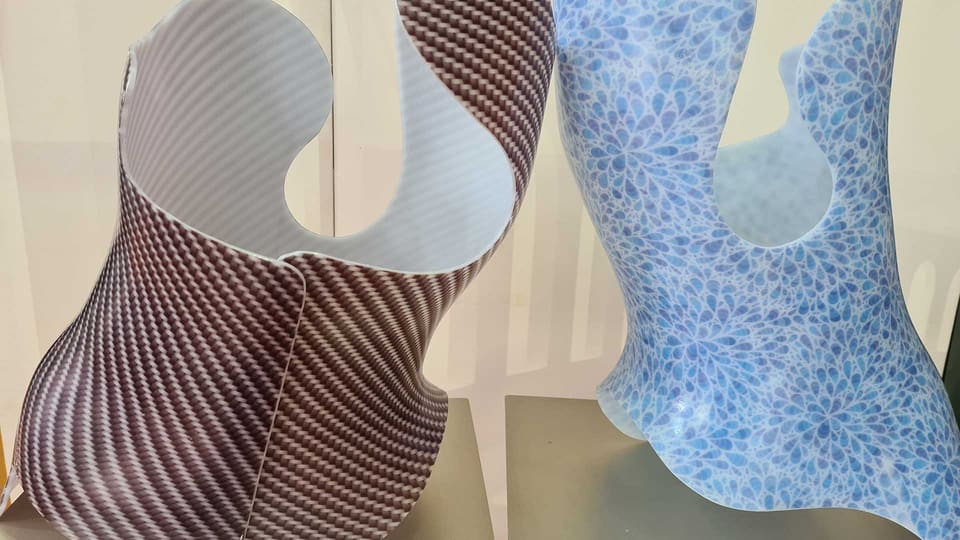
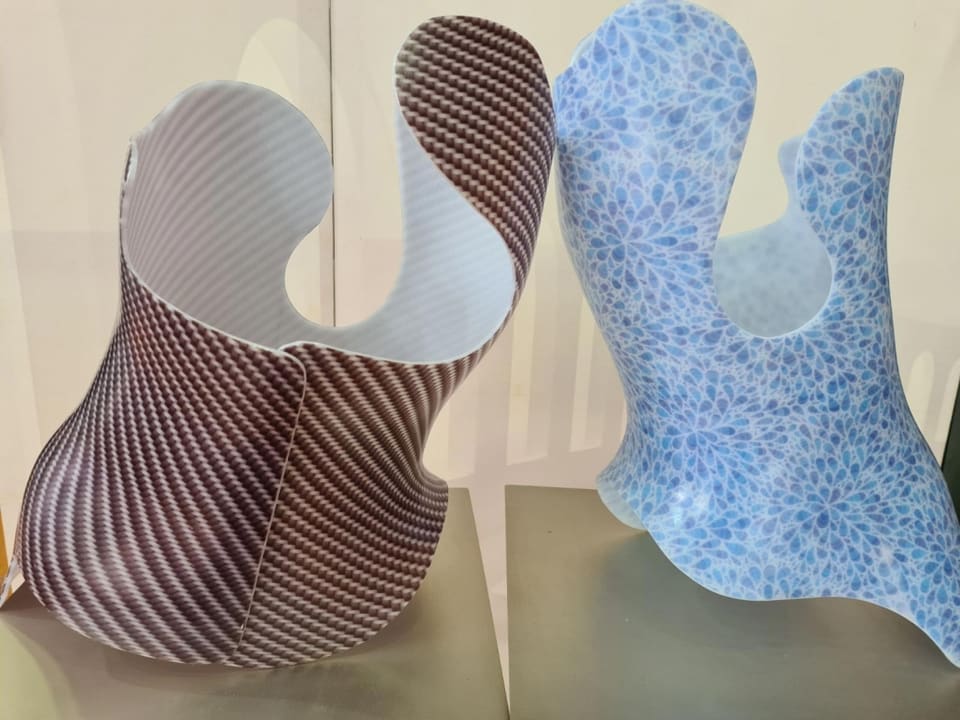
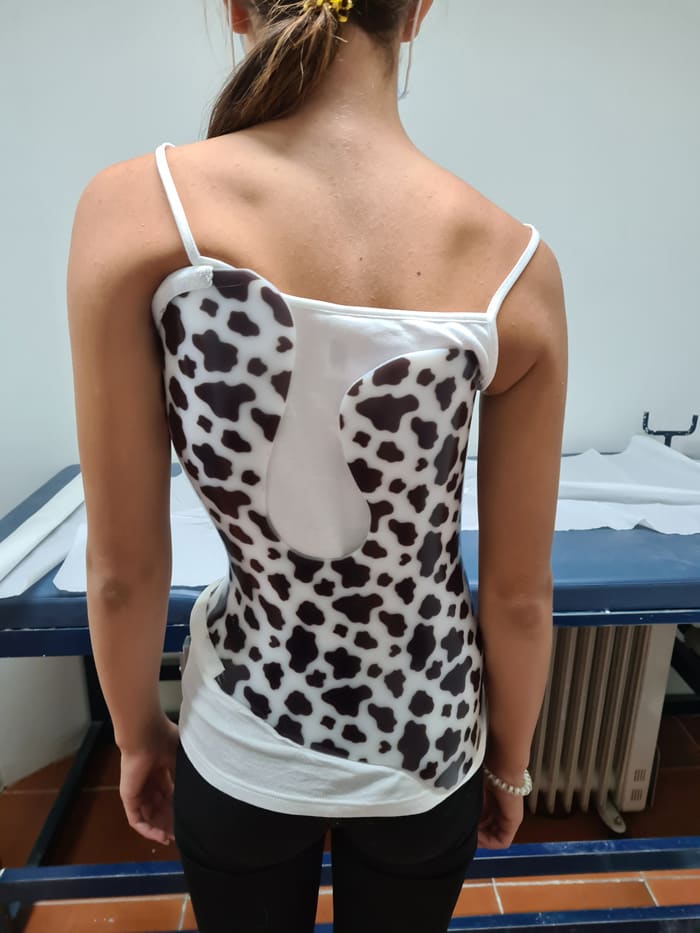
Braces can also have decorative patterns, like the ones you see in the photos. For many teenagers, choosing “their own” design makes the brace easier to accept.
How many hours a day the brace is worn
Wearing hours are set solely by the treating physician and vary with the type of brace and the curve. For daytime braces, the schedule is often many hours a day, in some programmes up to 23 hours, while night-time braces are worn during sleep.
At the start there is usually a breaking-in period, during which the hours are increased gradually, according to the doctor's instructions. What helps in practice:
- A simple wear log (when the brace goes on, when it comes off) helps the child, parents and doctor see whether the schedule is being followed.
- A steady routine: e.g. the brace comes off for the shower and goes back on straight afterwards.
- Honesty: if your child is struggling, it is better to say so, so that a solution can be found, rather than “hide” the hours.
Living with a brace: school, sport, skin, clothes
School
The brace is worn under clothing and in most cases is not easily noticed. It is worth letting the class teacher or form tutor know, so that there is understanding, e.g. about a more comfortable chair. Support from friends makes a big difference.
Sport and PE
Physical activity is generally important for children with scoliosis. Whether the brace comes off for PE and which activities are allowed is decided by the doctor, who may also recommend specific physiotherapy exercises.
Skin care
- Always wear a thin, close-fitting, seamless cotton top under the brace at the pressure points.
- Check the skin every day. Slight redness that fades soon after the brace is removed is usually expected; redness that persists, blisters or sores should be reported to us and to the doctor.
- Keep the skin clean and dry. Ask the doctor before applying creams to contact areas.
- Clean the brace according to the instructions we will give you.
Clothes
Looser clothes, e.g. tops one size up and trousers with an elasticated waist, make everyday life easier. Many teenagers quickly find their own style.
The emotional side
For a teenager, a brace is not only a medical matter. Body image, friendships, school and sport matter a great deal at this age, and it is natural to have moments of frustration or anger. Listen to your child without playing down how they feel, give them a say in decisions (e.g. the design of the brace) and reward consistency. If the difficulty persists, talk to the doctor; support from a psychologist can help.
Follow-up and replacement as your child grows
A brace is not “make it and forget it”. The child grows, the curve changes, and the brace needs regular check-ups. The doctor monitors progress with clinical examinations and X-rays, while we check the fit and make the necessary adjustments.
When the child grows taller or changes build, the brace may no longer fit properly and a new one is needed. That is why EOPYY provides for frequent replacement in childhood (see below). Treatment usually continues until skeletal growth is complete, and the doctor decides when to stop.
Scoliosis brace cost and EOPYY
A scoliosis brace is custom made, so the price depends on the type and design. EOPYY (ΕΟΠΥΥ), Greece's national health insurance organisation, covers it for people insured in Greece under the following conditions:
- A prescription from a doctor of the specialty relevant to the condition, with a diagnosis code included in the schedule (e.g. M40, M41).
- Supply by an EOPYY-contracted provider, such as our company.
- A 25% co-payment by the insured person on the reimbursement price; if the invoice is lower, the 25% is calculated on the invoice amount.
| Brace (custom made) | Maximum reimbursable price | Replacement |
|---|---|---|
| Boston type | €595.00 | Up to age 16: every 6 months · Ages 16–18: every year · Adults: no replacement provided |
| Chêneau type | €669.00 |
Maximum reimbursable price under Government Gazette (ΦΕΚ) B' 1079/2022 (including VAT). These are maximum amounts, not guaranteed amounts; reimbursement depends on the prescription and on EOPYY's review. The information is correct as of the date this page was last updated.
For example, if the invoice for a Boston-type brace is equal to or higher than the maximum price, the 25% co-payment is calculated on €595 and comes to €148.75. For other types of brace, or to find out what applies in your case, contact us. You will find the full process on our EOPYY reimbursement page. If you are not insured in Greece, EOPYY reimbursement does not apply; you can pay privately, and any cover depends on your own insurer's rules – contact us and we will give you the information you need for your case.
How we can help
We have been making orthoses and braces in Thessaloniki since 1952, always in line with the treating physician's instructions. Our priority is for your child to have a brace made exactly to their measurements, that they can wear as comfortably as possible, and to be by your side at every check-up and replacement. See also the other orthoses and braces we make, such as our 3D-printed paediatric AFO/SMO orthoses, and more articles for parents in our scoliosis and braces section.
Call us on +30 2310 282 894 or book an appointment at our workshop, Egnatia 101, Thessaloniki. Bring the prescription and the X-rays with you.
This article is for information only and does not replace medical advice. Consult your treating physician about diagnosis and treatment.