Bionic leg: C-Leg, Genium, Rheo Knee or Power Knee? How they compare, who they suit and what they cost
Microprocessor knees look alike, but they are not the same. We compare the C-Leg, Genium X3, Rheo Knee and Power Knee using manufacturers’ data, and explain cost and EOPYY.
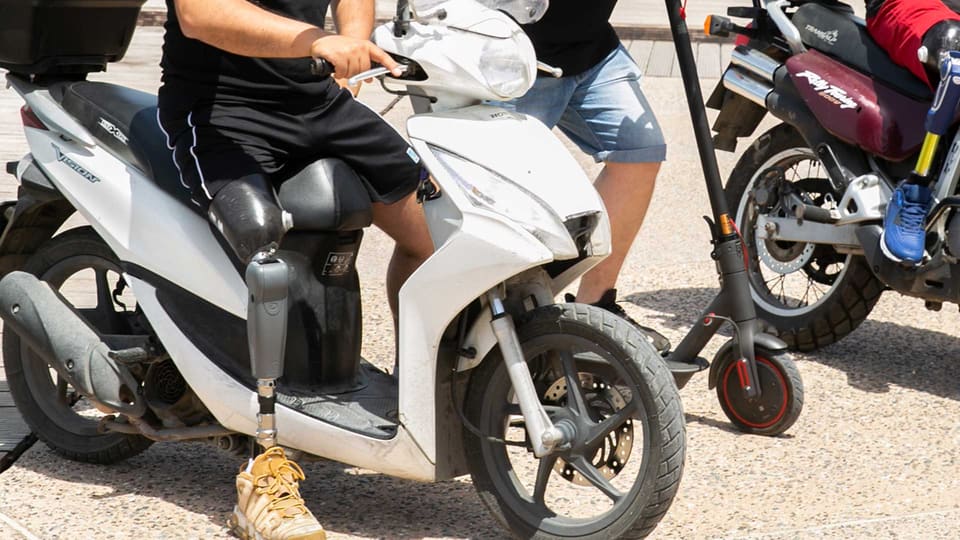
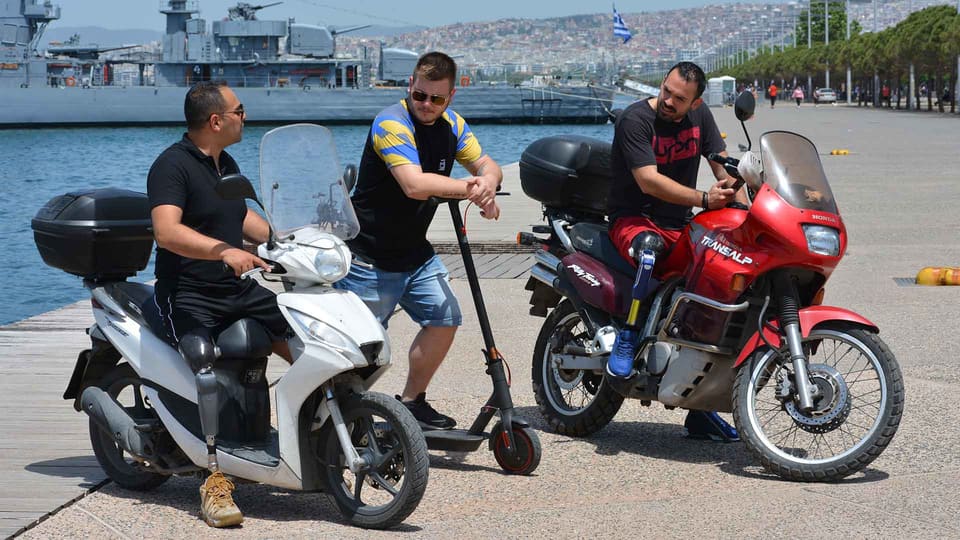
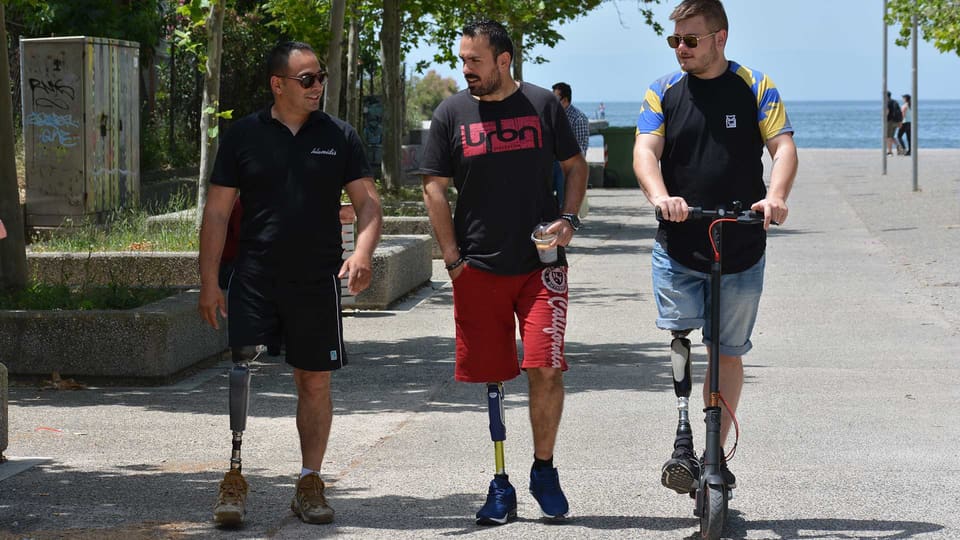
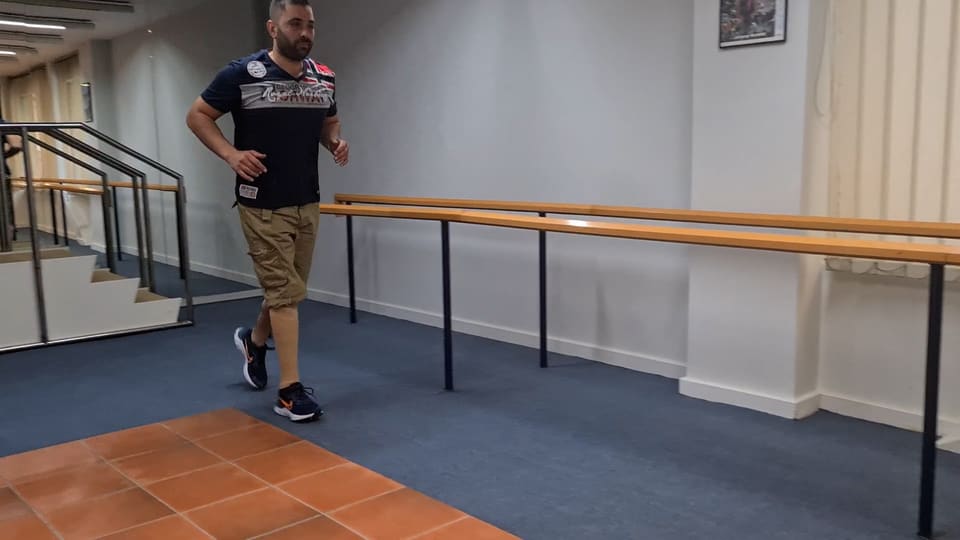
When someone with an above-knee amputation starts searching for a “bionic leg”, four names come up straight away: C-Leg, Genium, Rheo Knee and Power Knee. All of them are microprocessor knees — prosthetic knees controlled by a small computer and sensors. But they differ in how they work, who they are designed for and, of course, in cost. In this article we compare them using data from the manufacturers themselves, Ottobock and Össur, both of whom we work with.
At a glance
- C-Leg 4 (Ottobock): hydraulic microprocessor knee for a wide range of users, from moderate to high activity.
- Genium X3 (Ottobock): for very active users, with capabilities such as step-over-step stair climbing and a running mode; waterproof to IP68.
- Rheo Knee (Össur): uses magnetorheological fluid to change resistance; mainly intended for low to moderate activity.
- Power Knee (Össur): the only one of the four with a motor, giving active propulsion, e.g. when rising from a chair and on stairs.
- EOPYY, Greece’s national health insurance organisation, has no separate category for microprocessor knees; the choice is always made together with your doctor.
What is a bionic (microprocessor) knee?
With a mechanical or simple hydraulic knee, the prosthetist sets the resistance once, and the knee behaves the same way with every step. A microprocessor knee (MPK) has sensors that continuously measure the angle, load and movement of the prosthesis. The processor uses this data to change the knee’s resistance in real time.
In practice, this can mean that the knee “understands” when you walk faster or slower, when you go down stairs or a slope and when you stumble, and responds accordingly. The widely used term “bionic leg” describes this category, although each system achieves it in a different way. For a more general introduction, see our page on bionic technology in prosthetics.
Passive or active?
The C-Leg, Genium and Rheo Knee are passive systems: they precisely control how easily the knee bends or straightens, but your body generates the movement. The Power Knee is active: it has a motor that adds energy to the movement. This is the most fundamental difference between the four.
C-Leg 4 (Ottobock)
The C-Leg was first launched in 1997 and is now in its fourth generation. It is a microprocessor-controlled hydraulic knee. According to Ottobock, it is intended for users with mobility grades 2 to 4 and a body weight of up to 136 kg.
Key features, as described by the manufacturer:
- Stumble Recovery: when the sensors detect a movement that looks like a fall, the knee immediately increases resistance.
- Controlled stance flexion, which makes it easier to go down stairs step by step, and down ramps and slopes.
- The ability to walk backwards, and stable support when you are standing.
- IP68 protection (according to Ottobock, protection against fresh water down to 3 m for 1 hour) and a smartphone app for selecting preset modes (MyModes).
Who it suits: many users who walk both indoors and outdoors and want more stability and confidence on stairs and uneven ground. Find out more on our C-Leg page.
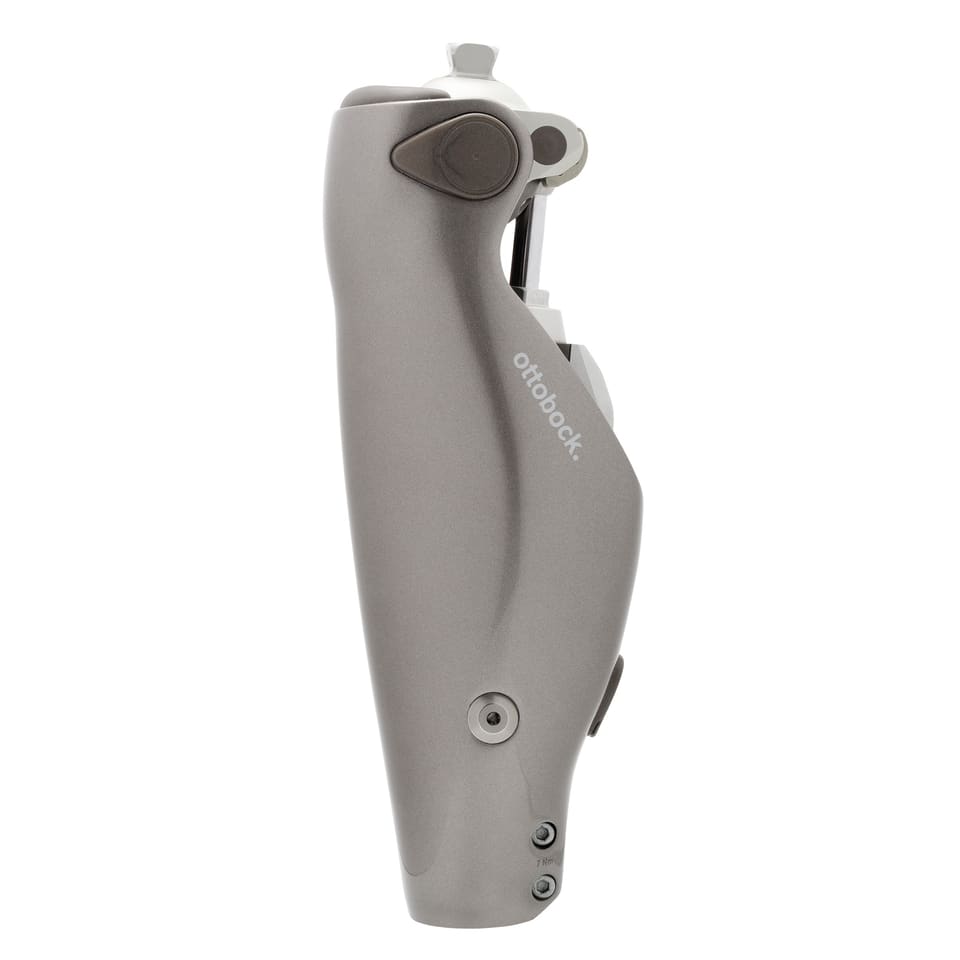
Genium and Genium X3 (Ottobock)
The Genium was built on the experience gained with the C-Leg and offers a wider range of movement. According to Ottobock, the Genium X3 is intended for users with mobility grades 3 and 4 and a body weight of up to 150 kg.
- Step-over-step stair climbing, as with a natural leg.
- Transition from walking to running, with an additional running mode for longer distances.
- Functions for stepping over obstacles and walking backwards.
- The Genium X3 has IP68 protection and, according to the manufacturer, can be fully submerged, even in salt or chlorinated water, without losing functionality.
Who it suits: very active people with demanding work, sporting activities or frequent contact with water. See our Genium page.
Rheo Knee (Össur)
Össur’s Rheo Knee uses a different technology: instead of hydraulic oil and valves, it has magnetorheological fluid, a fluid whose viscosity changes very quickly by means of an electromagnetic field. This allows the knee to adapt its resistance to your pace and to the terrain. Össur describes the system as “learning” the way you move.
- According to Össur, the Rheo Knee is intended for K2–K3 users, i.e. low to moderate activity; the Rheo Knee XC version also covers K4.
- It has IP34 protection (fresh water only), meaning it withstands rain but is not intended for immersion.
- It connects to the Össur Logic app, which lets the prosthetist make adjustments and the user check the battery and step count.
Who it suits: people who want smoother, safer walking in everyday life, without very high sporting demands. See our Rheo Knee page.
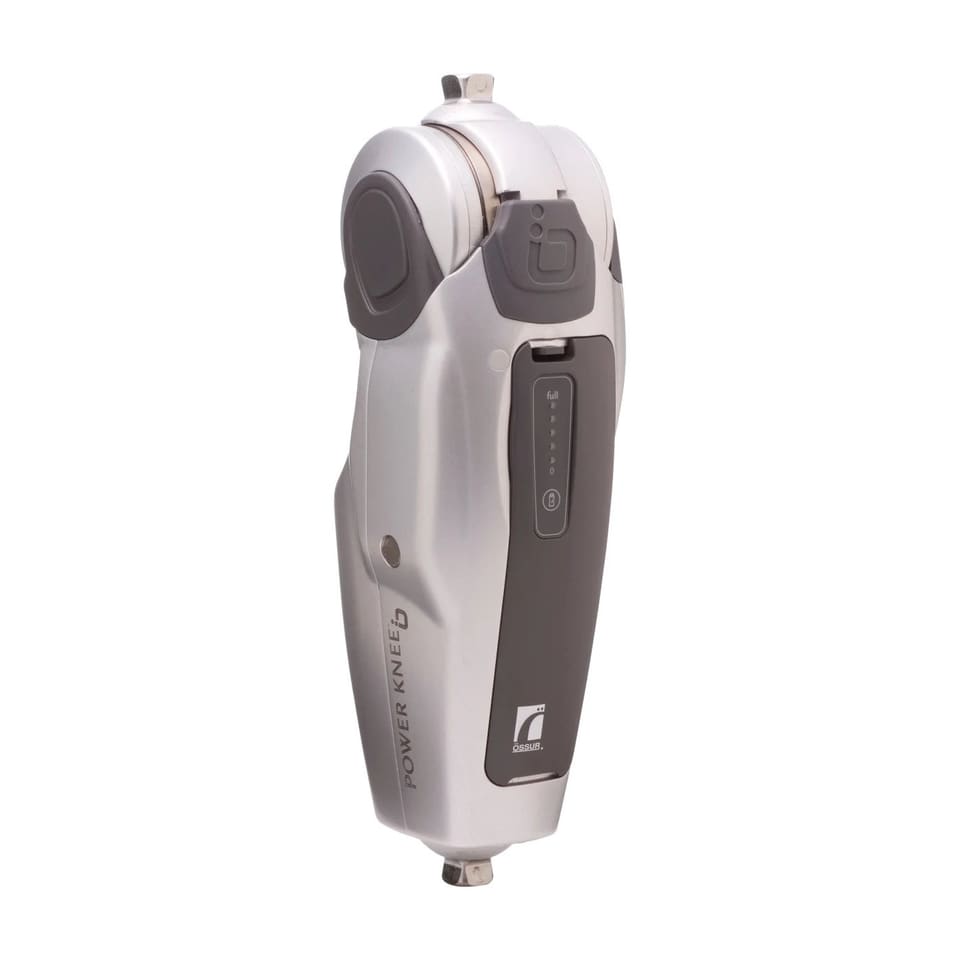
Power Knee (Össur)
According to Össur, the Power Knee was the first motor-powered microprocessor knee on the market. It does not just control resistance: it generates energy. This can help with movements where a passive knee provides no propulsion, such as:
- standing up from a seated position,
- climbing stairs step over step,
- walking uphill — while on the way down stairs and ramps it provides controlled resistance.
According to the manufacturer, it is intended for K2–K4 users with an above-knee amputation, knee disarticulation or hip disarticulation, with a weight limit of 116 kg and IP54 protection (fresh water). Össur cites symmetry in walking, stability and energy conservation as its main benefits. Who it suits: people who need “power assistance”, e.g. because of reduced muscle strength or bilateral amputation — always following a clinical assessment. See our Power Knee page.
Bionic knee comparison table
The data comes from the manufacturers’ official pages (Ottobock, Össur) as of the date this article was last updated and may change with newer versions.
| Feature | C-Leg 4 | Genium X3 | Rheo Knee | Power Knee |
|---|---|---|---|---|
| Manufacturer | Ottobock | Ottobock | Össur | Össur |
| Technology | Hydraulic, microprocessor | Hydraulic, microprocessor | Magnetorheological fluid, microprocessor | Motor, microprocessor |
| Type of movement | Passive | Passive | Passive | Active |
| Activity level (per manufacturer) | 2–4 | 3–4 | K2–K3 (XC: K2–K4) | K2–K4 |
| Water protection | IP68 (fresh water) | IP68 (also salt/chlorinated) | IP34 (fresh water) | IP54 (fresh water) |
| Maximum body weight | 136 kg | 150 kg | Depends on version | 116 kg |
| Step-over-step stair climbing | Not stated | Yes | Not stated | Yes (with active propulsion) |
| Typically suited to | Everyday confidence, moderate to high activity | Very active users, sport, water | Smooth walking, low to moderate activity | People who need extra power |
The table helps you get your bearings, but it does not replace a clinical assessment. The choice depends on your residual limb, your physical condition, your goals and your doctor’s judgement.
And the bionic ankle: Proprio Foot
Microprocessor technology is not just about the knee. Össur’s Proprio Foot is a microprocessor-controlled ankle: it lifts the toes of the foot during the swing phase to reduce the risk of the foot catching, and adjusts its angle on uphill and downhill slopes and on stairs. According to the manufacturer, the latest version is waterproof to IP67. If you have a below-knee prosthesis or an above-knee one, ask us whether a bionic ankle is suitable in your case.
Am I a candidate for a bionic knee? Five questions to get you started
No test gives you the answer on its own, but the following questions will help you prepare for the conversation with your doctor and with us:
- How much and where do you walk? Mainly at home, or also outdoors, at work, on pavements, uphill and on uneven ground?
- How confident do you feel on stairs and slopes? If you are afraid of falling or have fallen, the stability of a microprocessor knee may matter a lot to you.
- Do you have the strength to get up from a chair easily? If not, an active, motor-powered system may be worth discussing.
- What are your goals? Running, cycling, the sea, standing for long hours at work? Each goal points to a different system.
- How stable is your residual limb? In the first months after amputation its volume changes, and a temporary prosthesis often comes before the final choice.
If your answers point towards a bionic knee, the next step is an assessment. If not, a well-adjusted mechanical or hydraulic knee, with a good socket and a suitable prosthetic foot, can meet your needs just as well.
How selection, fitting and training work
A bionic knee only performs well when the socket fits properly and the user has been trained. At our workshop the process usually includes:
- Assessment: we discuss your daily activities, your work and your goals, and examine your residual limb.
- Working with your doctor: the final choice is made together with your treating physician, who also issues the prescription.
- Socket and alignment: we make a custom socket, such as our M.A.S. anatomical sockets, and align the prosthesis.
- Software set-up: microprocessor knees are set up by the prosthetist with the manufacturer’s software, according to your gait.
- Gait training: in the dedicated prosthetic training area at our premises, working with a physiotherapist.
If you would like to try a system before you decide, ask us about the trial options available at the time.
Bionic leg: price and EOPYY
Microprocessor knees are the most expensive category of knee, and their price varies with the model and the complete make-up of the prosthesis (socket, suspension, prosthetic foot). That is why we do not give a “list price”: the real picture emerges after the assessment.
As regards EOPYY (ΕΟΠΥΥ), the price list annexed to Government Gazette (ΦΕΚ) B' 1079/2022 has no separate category for a microprocessor knee. The most expensive knee category is the hydraulic knee (category G5), with a maximum reimbursable price of €2,026. As a rule, therefore, EOPYY reimburses people insured in Greece up to the maximum amount of the category under which the doctor’s prescription is dispensed, with a 25% co-payment by the insured person, and the patient pays the rest. Under Article 53 of EOPYY’s Regulation (Government Gazette (ΦΕΚ) B' 3541/2026), EOPYY may, following a positive decision by the Supreme Health Council (ΑΥΣ), reimburse items beyond the annex. Practice varies from case to case, so contact us and we will check what applies to you. If you are not insured in Greece, EOPYY reimbursement does not apply; you can pay privately, and any cover depends on your own insurer’s rules — contact us and we will give you the information you need for your case.
You will find details of the amounts per component in our guide “How much does a prosthetic leg cost?” and on our page on EOPYY reimbursement. The information is correct as of the date of the last update.
Battery, charging and servicing
All microprocessor systems have a rechargeable battery. For the C-Leg 4, Ottobock states a battery life of about two days with average use. Most users charge their prosthesis every night, like their phone. For the Genium X3, Ottobock states that the user is alerted by vibration when the battery is very low and that, if it runs out, the knee switches to a safety mode.
Bionic knees also need regular servicing in line with the manufacturer’s instructions. Talk to us about the maintenance schedule and about general care of your prosthesis.
How we can help
Since 1952 we have been making prosthetic limbs in Thessaloniki, and we work with Ottobock and Össur. Ioannis Hlamidis, the third generation of the family, has trained at the Ottobock Academy. At Hlamidis Orthopaedic Center we will discuss with you honestly whether a bionic knee is the right choice for you, or whether another solution would meet your needs just as well.
Call us on +30 2310 282 894 or book an appointment at our workshop, Egnatia 101, 546 35 Thessaloniki, Greece.